
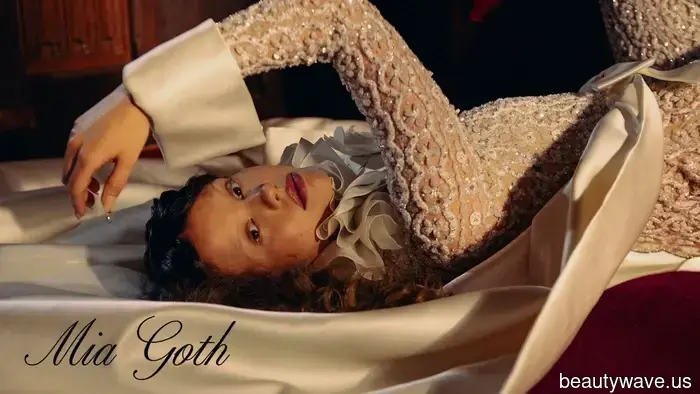
Mia Goth's Remarkable Moment
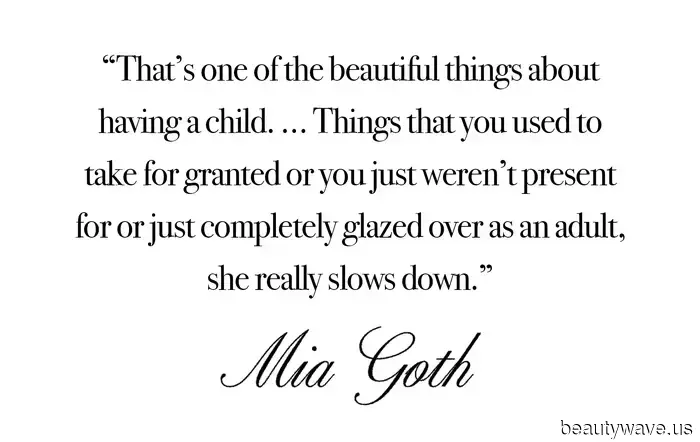
I met Mia Goth in late August at a small park located within the California Institute of Technology's campus in Pasadena. She chose a shaded bench that overlooked a series of small ponds and was surrounded by buildings occupied by the brilliant minds of tomorrow. I remarked to her that it was quite fitting, given the day's topic. She stars as the female lead in Guillermo del Toro's adaptation of Frankenstein, a lavishly produced film that has been a passion project of the acclaimed director for three decades, and is set to be 149 minutes long with a budget of $120 million, detailing the tale of a cursed inventor. Here we were, caught between nature and the ever-expansive realms of scientific inquiry. Goth glanced back at the Kellogg Radiation Laboratory and said playfully, "That did cross my mind. Scientists..." In truth, she mentioned that she chose this little park, with its boulders and lively turtles in the terraced pools, because it doesn’t feel like Los Angeles (more on that later), and also because she frequently visits it with her 3-year-old daughter, Isabel. It's a beloved outing for both of them. "One of the beautiful things about having a child... is that she really slows me down," she explained. "If I were here alone, I might just look at the turtles and move on. But with her, it turns into a whole morning." Goth, without any makeup on—truly none—and radiating happiness, shared earnestly that "parenthood is the greatest gift of my life."
This stands in stark contrast to Victor Frankenstein's experiences as depicted by Mary Shelley in her renowned 1818 novel and in del Toro's upcoming 2025 film. The filmmaker has taken certain liberties with the source material: his Dr. Frankenstein (played by Oscar Isaac) has a harsh, controlling father and channels his grief over the loss of his mother, portrayed briefly by an unrecognizable Goth (I confirmed this with both Netflix and her representatives), into a relentless pursuit to create life from the remains of corpses. He, too, becomes a parent—but a profoundly irresponsible one. His rejection of his creation (Jacob Elordi) leads to significant chaos and tragedy, a fate that could have been avoided with patience, compassion, and love—essentially, good mothering, underscored by Freudian symbolism regarding Victor's penchant for milk. There is a reason this narrative has resonated for over two hundred years and has been associated with themes ranging from the French Revolution to our growing dependence on AI: Shelley's work posits that just because we have the capability to do something, it doesn’t mean we should.
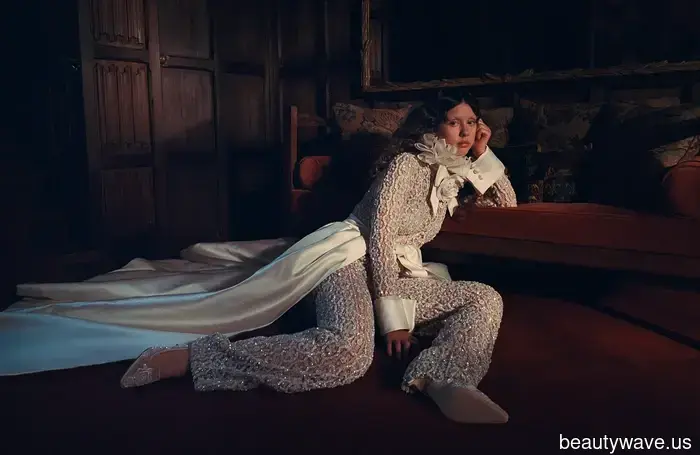
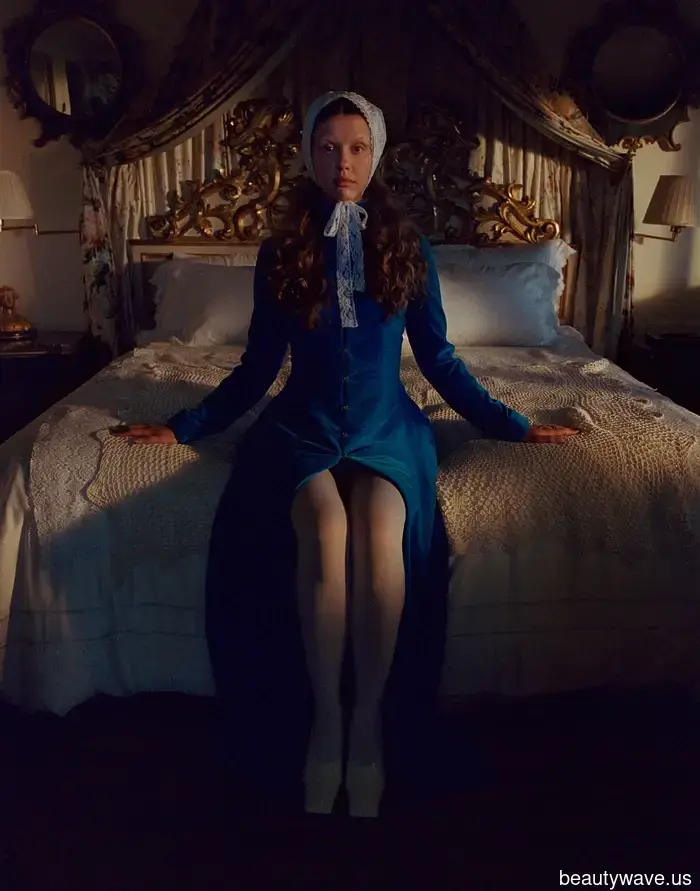
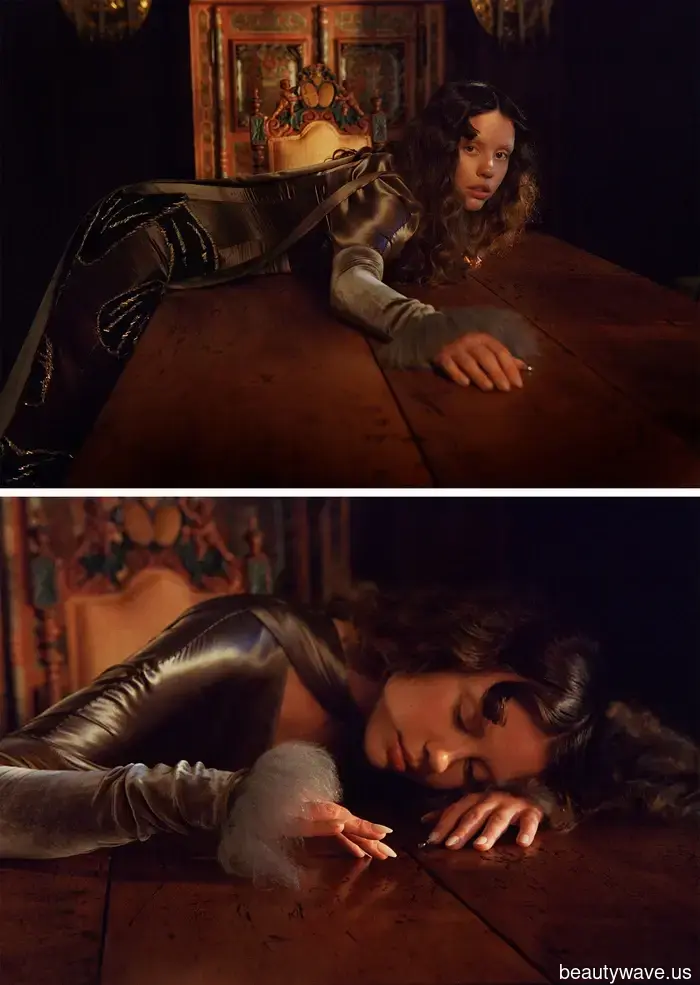
Goth's character in del Toro's film is Elizabeth Lavenza. In Shelley's story, she is Victor's innocent cousin and later wife, a passive figure who merely propels the narrative forward. However, in this version, she is portrayed as an educated young woman with her own thoughts who captivates Victor for reasons that seem linked to her striking resemblance to his mother. She is engaged to Victor's naive younger brother and has a wealthy uncle (Christoph Waltz) who unwittingly becomes embroiled in Victor's experiments. Goth's Elizabeth genuinely appreciates science, especially entomology, and cherishes both the natural and spiritual realms. After spending her recent years in a convent, her character embodies the essence of feminine virtue, presented with a blend of quiet kindness and grace, accentuated by a cerulean feathered fascinator that draws attention to Goth's eyes. To prepare for this role, Goth spent time with nuns in Alhambra, California, and read various books provided by del Toro on topics like entomology, the Book of Job, and the life of the 17th-century poet and playwright Sor Juana Inés de la Cruz. She even created a playlist, as she does for all her projects, primarily filled with compositions by Icelandic composer Jóhann Jóhannsson, which she later mixed with tracks by Jeff Buckley, Beirut, Eve, Big Sean, and Mariah Carey to balance the "composer energy." Goth realized that when she quieted her mind and truly connected with her inner self, that's where her character's essence resided.
Though she described the filming experience as magical ("I would have done anything Guillermo asked me to," she expressed, still in disbelief that she was part of his Frankenstein), the set was not a constant celebration. "I was struck by how focused and serene everyone was," she noted. "Everyone understood the significance of the project and what it could become if done right. In that sense, there were moments that felt rather lonely." She often felt the character's energy influenced the atmosphere on set. "Considering my character is the only woman in a Victorian setting, it inherently felt isolated."
Goth believes all storytelling has an autobiographical element, and she feels a part of Shelley resides within each character. At the time she wrote Frankenstein
Other articles
 I'm a Shopping Editor—31 Stylish Accessories Under $50 on Amazon That I'm Considering During the Prime Big Deal…
Today is the final day to take advantage of October Prime Day sales!
I'm a Shopping Editor—31 Stylish Accessories Under $50 on Amazon That I'm Considering During the Prime Big Deal…
Today is the final day to take advantage of October Prime Day sales!
 Leggings! Bras! Loungewear Sets! Here are 30 of the Top Intimates and Activewear Amazon Prime Deals You Won’t Want to Overlook.
Sales will conclude on October 8.
Leggings! Bras! Loungewear Sets! Here are 30 of the Top Intimates and Activewear Amazon Prime Deals You Won’t Want to Overlook.
Sales will conclude on October 8.
 Achieving a Parisian look in Paris is only possible if you have these 12 essential fall wardrobe items.
Purchase them; they give a French appearance. It's really that straightforward.
Achieving a Parisian look in Paris is only possible if you have these 12 essential fall wardrobe items.
Purchase them; they give a French appearance. It's really that straightforward.
 As a Fashion Editor, I'm currently participating in the live shopping event for the Amazon Prime Sale, and I’m completely fascinated by these styles and…
As a shopping editor, I'm currently live-shopping the top fashion and beauty sale items from the Amazon Prime Big Deal Days 2025, featuring brands such as Levi's, Hanes, and Madewell.
As a Fashion Editor, I'm currently participating in the live shopping event for the Amazon Prime Sale, and I’m completely fascinated by these styles and…
As a shopping editor, I'm currently live-shopping the top fashion and beauty sale items from the Amazon Prime Big Deal Days 2025, featuring brands such as Levi's, Hanes, and Madewell.
 ICYWW, here are the 15 fragrances that are truly worth grabbing for October Prime Day.
They are too excellent to overlook.
ICYWW, here are the 15 fragrances that are truly worth grabbing for October Prime Day.
They are too excellent to overlook.
 Final Opportunity! These Amazon Fashion and Beauty Sale Products Will Be Sold Out by Day's End.
Act quickly before it’s too late!
Final Opportunity! These Amazon Fashion and Beauty Sale Products Will Be Sold Out by Day's End.
Act quickly before it’s too late!
Mia Goth's Remarkable Moment
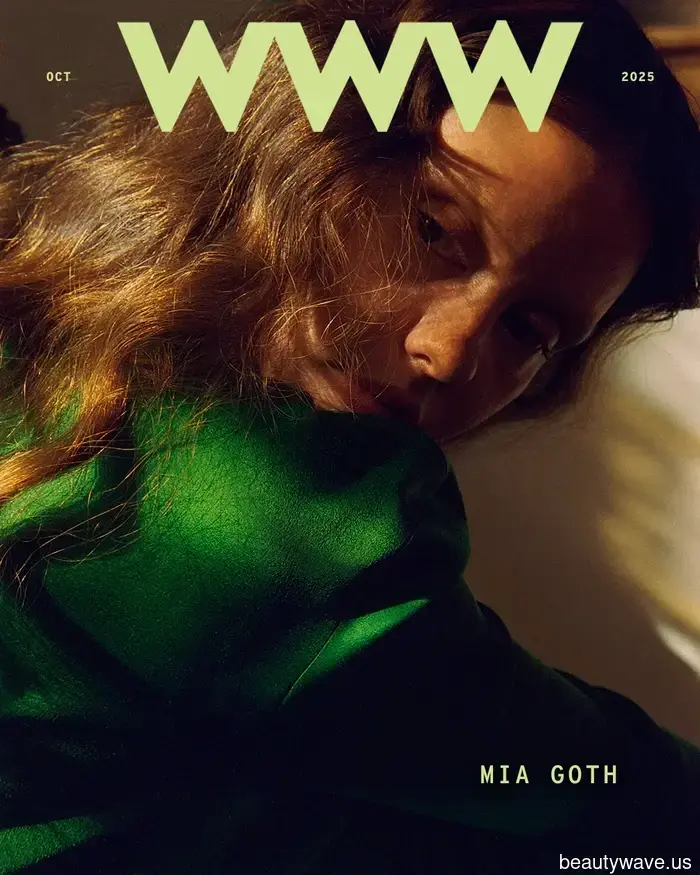
In our October 2025 cover feature, we interview Mia Goth about her role in Guillermo del Toro's Frankenstein and her exciting year filled with monstrous projects ahead.