

White Education vs. Information Business: A Perspective from Methodologist Natalia Kunderа
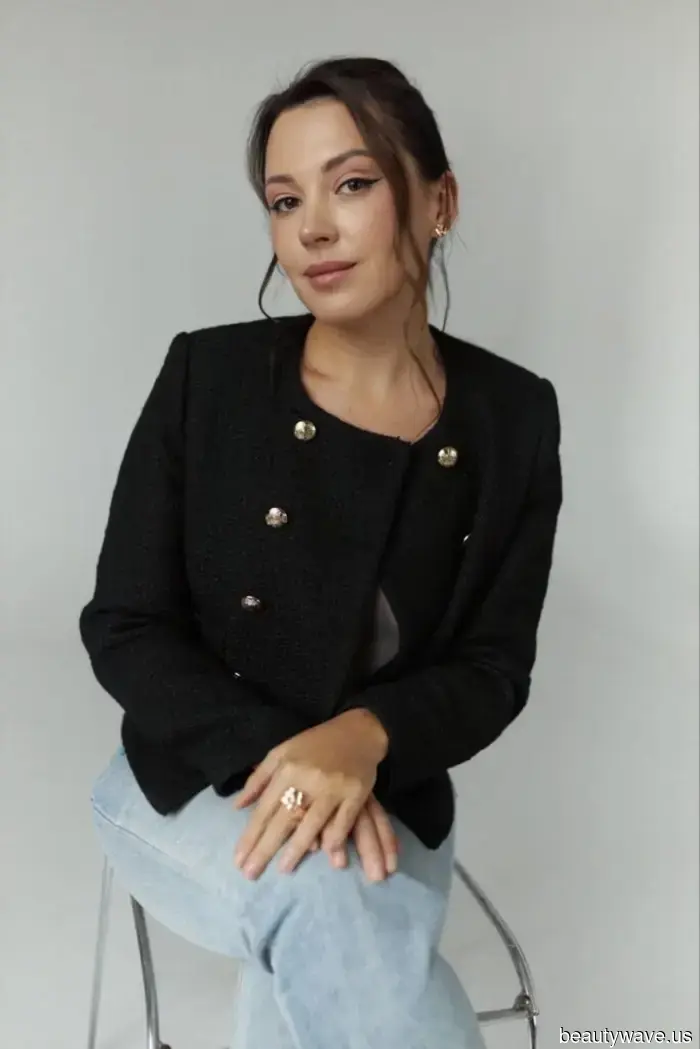
Natalia Kundera is a person who has long stopped simply teaching and has become an architect of education. For her, methodology is not an abstract word from a textbook, but a real tool capable of changing the lives of students and course authors. Since her school years, she has been searching for ways to convey knowledge to everyone who truly wanted it, and over time she turned this into a systematic approach that helps adults learn effectively. In our interview, Natalia will talk about how her profession was born, why white education has become the mission of her entire life, and which projects give a sense of real progress.
Natalia, methodology is not the most obvious calling. How did you come to this word and this profession?
I became a methodologist before I even knew that’s what it was called. Because I have been in education my whole life – it’s not a career choice, it’s just who I am.
It started in school. We had a classmate, Sasha, who didn’t understand German (my first foreign language) the way the teachers explained it. He only understood when I explained it because I did it differently. I just developed a system for him, not thinking it was anything special. It seemed obvious to me: technical students need to be explained differently than humanities students.
Then there was the language university – my first education, foreign languages. As soon as I became a student, I immediately started teaching: I wanted to eat, and teaching little ones German was the most understandable path for a broke student. I have been teaching since I was 18, and soon it will be 20 years that I have been teaching others.
During the lockdown, I moved into online education – tried different things, including producing. But I realized that it wasn’t for me. And at some point, I realized that what I was actually doing was called methodology. Not a new profession, just finally found a word for what I have been doing my whole life.
Methodology is a way to truly influence education. Not just to conduct a lesson well, but to build a system that works without you, changes people, and does so honestly. That’s why I’m here.
What was the very first program? What do you remember about it?
The first serious entry point was the American startup Linguatrip – an online English language school. Not an info business in the usual sense, but a real school with a strong team. I built the entire online direction practically from scratch. When I joined, there was nothing but live lessons. When I left, there were already 80 recorded products. This was perhaps one of the most complex product matrices in my practice: we tried to enter different markets, including the Chinese one, adapting products for completely different audiences. And in general, making it so that 80 products existed simultaneously is a task with a star.
You wrote that good education changes not only students but also authors. When did you feel this yourself?
I feel this regularly. Education is, in my opinion, the only truly honest social lift. But it is significantly broader than just lessons: the educational environment includes students, teachers, and the atmosphere itself.
The first university changed me a lot: it showed my capabilities, taught me to combine study, work, and organizational load. Then – teacher training in Germany, where there was a completely different communication approach to students. And now, in every strong program I participate in as a student, I see how I change. Sometimes it’s a new tool, sometimes it’s the mindset of an expert that completely flips the picture. Sometimes it’s a group where your “study colleague” can greatly change your life.
Where did you study methodology, or is it a profession you had to piece together yourself?
I have a master's degree in pedagogy from a Moscow university. Plus, teacher training in Germany (I have the right to teach German in Germany), which seriously changed my perspective on working with students. But honestly: there is still almost no good systematic training specifically for methodologists in the sense that I understand this profession.
Many things I did intuitively and only later found confirmation that it was correct. So yes, a lot was pieced together. It is from this experience that our School of Product grew – we teach adult methodology, which is rare in itself: most pedagogical programs (from “pedo-” – translated as “child”) are aimed at children, while andragogy, or adult education, is a separate, complex discipline.
What dissatisfied you with how online education was organized when you first started? What did you want to change?
I was dissatisfied and still am that adults are taught the same way as children. All traditional pedagogy is geared towards children. An adult is a completely different story: they come with attitudes, beliefs, sometimes with the thought “I can’t do this.” Working with this needs to be done differently.
I was even more irritated by the boom of info business: when people far from education sold courses with loud promises. This created a huge amount of disappointment. My mission at that time was to help create products that really work – what I call white education. Not for the sake of formality, but for results. Such education really works and changes lives.
And this hasn’t gone anywhere, it’s just become less obvious. Earlier, they sold “a million in a month” – at least it was easy to recognize. Now the same people have learned the word “methodology” and put it on their landing page. Inside are the same lectures without structure, without points of control for results, without understanding who this adult person is and how they learn. I call this gray education. It’s not openly bad, but it doesn’t work either. It’s the hardest to work with because you can’t tell from the outside.
Tell us about a person or book that has had the strongest influence on your professional perspective.
There isn’t one such person or book. I learn literally from everything. I can observe how a child acquires a new skill – without fear, through trial and error, and use that in a program for adults. I can study the foreign experience of a specific school and take 10% of what’s relevant from there. For me, education is constant observation of how people learn and searching for what really works.
How do you explain in simple terms how a methodologist differs from a course producer or just a content packager?
A methodologist is an advocate for the student. Their main task is to ensure that the student succeeds. They think not in terms of money, but in terms of results – did the student reach the end, did they acquire the skill, were the product promises fulfilled?
A producer thinks in terms of launches and sales. They say: “We need to sell five million, here’s the product.” The methodologist responds: “Great, but let’s discuss – can you really get everyone to do the splits in a week?”
A good launch is built exactly like this: the producer is responsible for the commercial side, the methodologist ensures that the education inside actually works.
What is a good course structure, is there a universal formula, or is it created from scratch each time?
I love the comparison to a house. Any educational program has a foundation, walls, interior finishing, and a roof, and all of this must hold together.
The foundation is architecture: we define the IKR (ideal final result). What exactly can the student do upon completion? Write posts or any strong texts? These are different programs. Next is development: the goal is divided into steps, steps become modules, modules become lessons. Each lesson leads to a result, not just conveys information.
There is a universal logic. But then everything depends on the type of product – recorded course, live training, community, offline format. These are different constructions and are assembled differently.
What is the most common mistake an expert makes when creating a course – the one you see over and over again?
An expert confuses “knowing” with “being able to convey.” They sit down to create a course and start unloading everything they have accumulated over years of practice. It ends up being an encyclopedia – complete, detailed, and absolutely non-functional. Because the question is not how much you know, but what the student should be able to do upon completion and what the minimally necessary path to that skill is.
It’s hard for an expert to cut material. They feel that without every nuance, the picture is incomplete. But an overloaded program is not a sign of depth, but a sign of a lack of methodology. A good methodologist helps separate what the student needs from what is important to the expert.
What happens when there is no methodology, what does a poorly designed course look like from the inside?
It’s a library of knowledge that no one finishes reading. An important indicator is the completion rate of the product. For mass courses without strong methodology, it usually does not exceed 10%, and even more often, five.
Do you know how this would look offline? Imagine: you have a class of ten students – nine get up and leave. That’s what a lack of methodology looks like. Why does this happen most often? The student receives a set of materials, not a skill. It’s like opening Wikipedia: the information is there, but there is no movement towards a result.
Tell us about the most challenging project without naming names. What made it challenging and how did you get out of the situation?
I love challenging projects and willingly take them on. One such project was a program for medical professionals in a very narrow innovative specialization. I had to dive deeply into terminology that I didn’t know before. I figured it out, but I won’t name the direction: the audience is small, specialists will immediately understand what I’m talking about.
Another memorable project was a large creative leadership program in a laboratory
Other articles
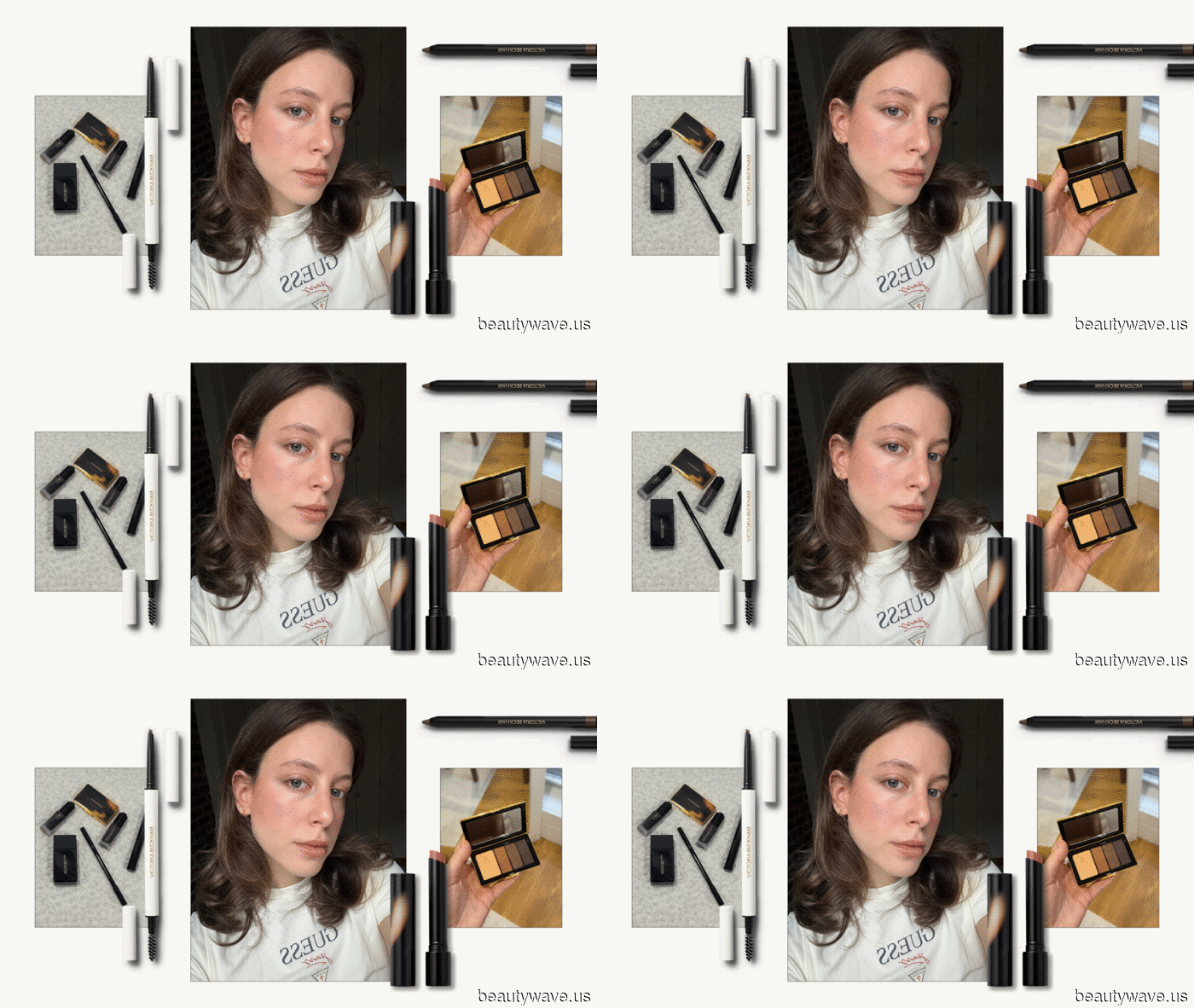 I Used Victoria Beckham Beauty for Just 16 Days—13 Products I Can't Part With
Quick essentials.
I Used Victoria Beckham Beauty for Just 16 Days—13 Products I Can't Part With
Quick essentials.
 It's Here: The Hottest Accessory for Denim in 2026
This trend is flying off the shelves everywhere.
It's Here: The Hottest Accessory for Denim in 2026
This trend is flying off the shelves everywhere.
 White Education vs. Info Business: A Methodologist's Perspective by Natalia Kunderа
Natalia Kundera is a person who has long stopped simply teaching and has become an architect of education. For her, methodology is not an abstract word from a textbook, but a real tool capable of changing the lives of students and course authors. Since her school years, she has been searching for ways to convey knowledge to everyone who truly wanted it, and over time she turned this into a systematic approach,…
 It's Arrived: The Hottest Accessory for Denim in 2026
This trend is being sold out everywhere.
It's Arrived: The Hottest Accessory for Denim in 2026
This trend is being sold out everywhere.
 I Used Victoria Beckham Beauty for Just 16 Days — 13 Products I Can’t Part With
Quick essentials.
I Used Victoria Beckham Beauty for Just 16 Days — 13 Products I Can’t Part With
Quick essentials.
 It's Here: The Must-Have Accessory for Denim in 2026
This trend is completely selling out everywhere.
It's Here: The Must-Have Accessory for Denim in 2026
This trend is completely selling out everywhere.
White Education vs. Information Business: A Perspective from Methodologist Natalia Kunderа
Natalia Kundera is a person who has long stopped simply teaching and has become an architect of education. For her, methodology is not an abstract word from a textbook, but a real tool capable of changing the lives of students and course authors. Since her school years, she has been searching for ways to convey knowledge to everyone who truly wanted it, and over time, she turned this into a systematic approach,…