
The Bride-to-Bob Pipeline Requires Explanation—Here’s Why Many Cut Their Hair Short After Getting Married.
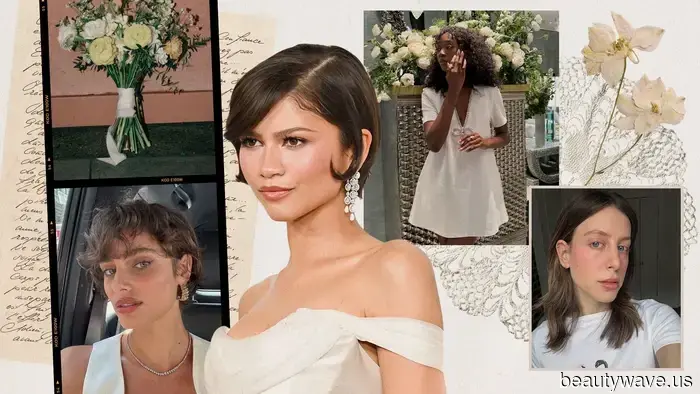
Once the vows are exchanged, the cake is cut, and all the meticulous planning has come to fruition, the newlywed bride deserves a bit of traditional self-care—a sort of reset, if you will. Some couples opt to dive straight into their honeymoon, while others might start on thank-you notes or browse through early wedding photos, but most find a way to take a moment and enjoy the post-wedding joy. Gabi, an e-commerce coordinator getting married on April 26, is heading directly to the salon. “I’ve already booked an appointment for a bob cut on April 29, just three days after the wedding,” she shares. Talk about a reset, and Gabi is certainly not alone. Although not every bride plans a post-wedding haircut in advance, many (myself included!) do choose to make a dramatic change shortly after the "I do's"—some even right after the ceremony for a bold moment at the reception—whether it's a bob, lob, pixie, or even something in between (have you heard of a bixie?). The question is… why?
Let’s start with the practical aspect: Many brides (including myself) grow their hair out specifically for their wedding day. "There’s a sentiment that bridal hair should look soft, effortless, and romantic, and longer lengths contribute to that," says hairstylist Paul Perez, co-owner of Flore Los Angeles. However, shorter styles can be just as romantic. A well-defined bob or pixie is equally timeless; ultimately, the perfect bridal hairstyle is the one that makes you feel the most beautiful on your special day. For brides uncertain about which style to choose, longer hair often allows for more experimentation with various trends—twists, updos, etc. "In fact, almost 99% of the time, you add more hair using extensions," observes celebrity hairstylist Temur Hamilton (who cut my own lob about a month ago!).
Maintaining longer hair can often be a time-intensive task, so once the vows are exchanged, it’s understandable that brides may want a break from that upkeep. Post-wedding, my hair felt particularly damaged (thanks to highlights, extensions, and a last-minute chemical treatment), so cutting off the damaged ends seemed like the right choice.
This three-minute hair mask has become my go-to for repairing damage.
According to neuropsychologist Sanam Hafeez, PsyD, there’s more to the trend of brides opting for a bob than it may seem. "In my practice, clients often mention it almost casually, the way you might refer to something without realizing its significance. 'I just felt like cutting it after the wedding,'" she explains. "When we take a moment to reflect, there’s usually a deeper reason. A quiet release. A reclaiming of oneself after being, in many ways, a focal point of an event." Unless you’re a celebrity constantly in the spotlight, there are probably only a few occasions in life where you spend extensive time in the salon for a highly publicized event. Even celebrities known for their red carpet appearances have participated in the bride-to-bob transition. Take model Taylor Hill, who wed private equity investor Daniel Fryer in June 2023 and was seen with a textured pixie by that September. While it’s unclear whether Zendaya and Tom Holland actually tied the knot, she did debut a noticeably shorter bixie during Paris Fashion Week shortly after stylist Law Roach suggested they were married at the 2026 Actor Awards. Coincidence? Maybe, but I consider the haircut a plausible point to support that theory. (She also appeared at the Louis Vuitton fall/winter 2026 show wearing a gold wedding band on her left hand. I digress!)
For brides, the pressure runs high, and even amidst abundant love, the production can understandably create some stress. "One of my dear friends cut her hair six weeks after her wedding," Hafeez recalls. "When I asked her why, she just laughed and said, 'I felt like myself again.' She couldn't articulate it well, but I understood what she meant." Sometimes, you can navigate significant joyful life changes and still find yourself at a crossroads, eager to commemorate that transition.
Hair is closely tied to identity, and when it evolves, there’s often a desire for a cut to signify that internal change. This is similar to the "breakup bangs" stereotype, which involves changing one's hair drastically to shed the past, but a bold haircut doesn’t always need to indicate trauma. As Hafeez explains, "It signifies transition." While breakup bangs symbolize separation—literally cutting off a piece of your history—"bridal bobbing is subtler, less about fleeing, more about arriving," she continues. "But the concept is similar: I am newly me, and I want my external appearance to reflect my new inner self." This shift in identity happens almost subconsciously


Other articles
 Getting Married? Here Are 16 of the Most Elegant Nail Colors for Your Toes.
Refined from head to toe.
Getting Married? Here Are 16 of the Most Elegant Nail Colors for Your Toes.
Refined from head to toe.
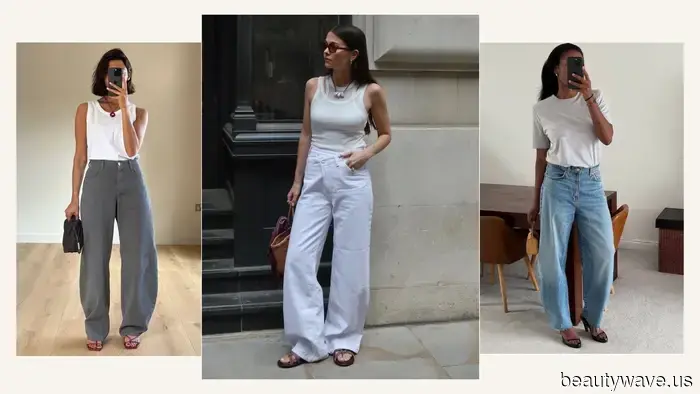 I’ve conducted the research—here are the most stylish sandals to pair with barrel-leg jeans.
Here are the top sandals to pair with barrel-leg jeans, ranging from stylish flip-flops to sleek toe-strap sandals.
I’ve conducted the research—here are the most stylish sandals to pair with barrel-leg jeans.
Here are the top sandals to pair with barrel-leg jeans, ranging from stylish flip-flops to sleek toe-strap sandals.
.jpg) The Chic Flat-Shoe Color Trend That Every It Girl Is Pairing With Shorts and Pants (Hint: It Isn't Red)
Clue: It isn’t red.
The Chic Flat-Shoe Color Trend That Every It Girl Is Pairing With Shorts and Pants (Hint: It Isn't Red)
Clue: It isn’t red.
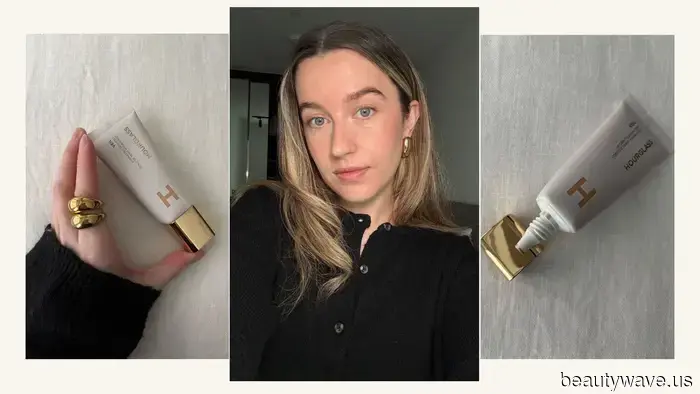 This Skin Tint Looks So Natural That I've Completely Stopped Using Foundation.
It’s really that great.
This Skin Tint Looks So Natural That I've Completely Stopped Using Foundation.
It’s really that great.
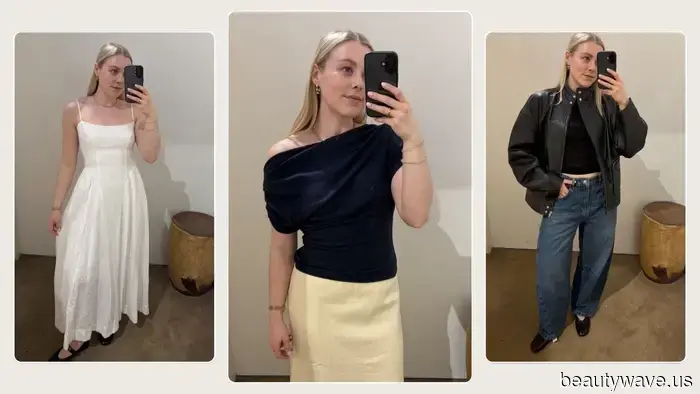 I Recently Created My Ideal Spring Wardrobe with This Classic, Editor-Approved Brand—13 Stylish Pieces I Selected.
The new collection from Reformation has arrived, and I went to the store to create four sophisticated outfits to depend on this spring.
I Recently Created My Ideal Spring Wardrobe with This Classic, Editor-Approved Brand—13 Stylish Pieces I Selected.
The new collection from Reformation has arrived, and I went to the store to create four sophisticated outfits to depend on this spring.
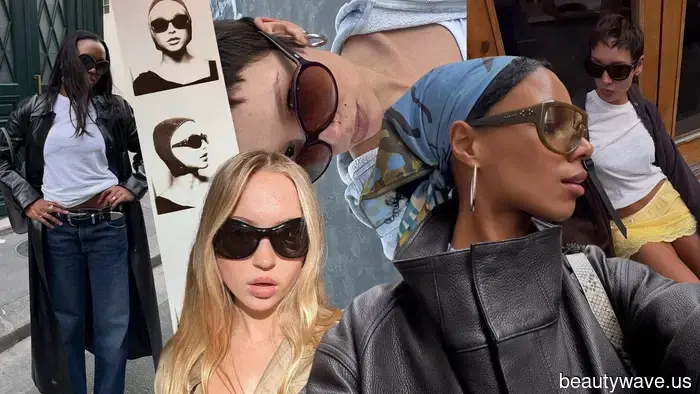 Rather than Aviators or Ovals, this 2000s sunglasses trend gives an outfit a 2026 peak appearance.
Move over, micro oval sunglasses. The newest craze among Gen Z is the oversized, insect-like frames, marking the most significant accessories trend for spring 2026.
Rather than Aviators or Ovals, this 2000s sunglasses trend gives an outfit a 2026 peak appearance.
Move over, micro oval sunglasses. The newest craze among Gen Z is the oversized, insect-like frames, marking the most significant accessories trend for spring 2026.
The Bride-to-Bob Pipeline Requires Explanation—Here’s Why Many Cut Their Hair Short After Getting Married.
The post-wedding haircut is definitely a thing.