
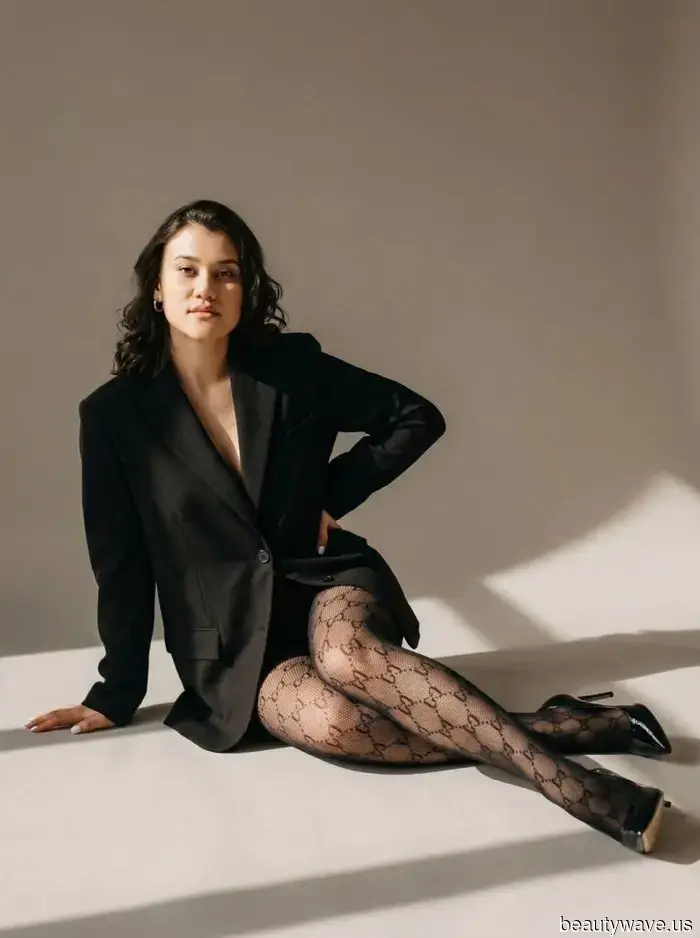
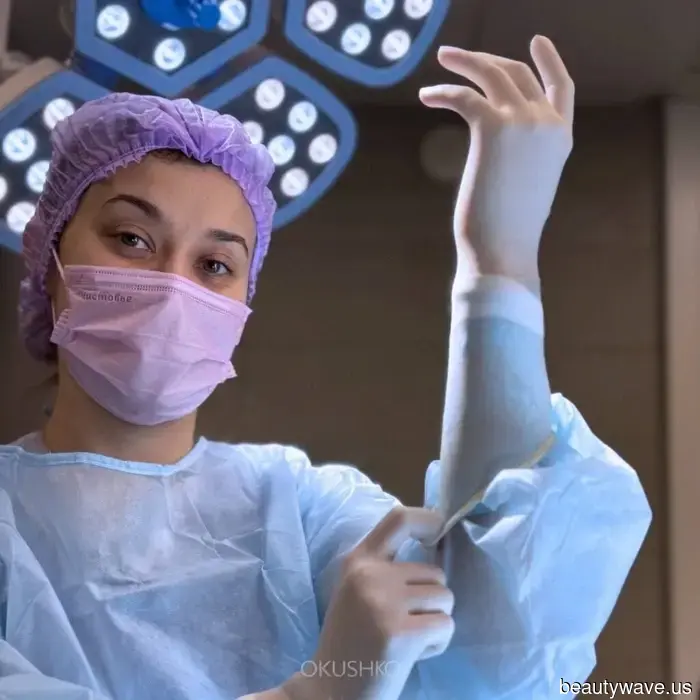
Sitora Okushko is a candidate of medical sciences and a plastic surgeon in an exclusive interview for Moda Topical.
How did you come to plastic surgery and cosmetology — was it a conscious choice or a gradual professional "narrowing of focus"?
Thank you for the interesting question. My path to plastic surgery and cosmetology is, without exaggeration, a conscious choice that took shape in childhood.
I remember giving a small school interview in the ninth grade, and when asked about my future profession, I confidently replied, "I want to be a plastic surgeon." At that time, it may have sounded like a dream — but for me, it was a clear goal. I was genuinely fascinated by how medicine can not only heal but also transform, restore people's confidence, and help them feel harmony between their inner state and outer appearance.
Today, working with patients, I am convinced every time: I chose the right path. Seeing a person blossom after surgery, how their self-esteem and quality of life change — this is the best reward for my work and years of training.
You are a candidate of medical sciences and an author of scientific papers. How does your scientific background influence your decisions in aesthetic practice today?
My scientific work, including my candidate dissertation on the rehabilitation of patients after endoscopic facelift, has formed the foundation of my approach to practice. As a scientist and practicing physician, I rely on evidence-based medicine. The scientific foundation teaches me to critically evaluate industry innovations. It is important for me not just to improve appearance — but to do so as safely and predictably as possible. Science helps maintain this standard.
What is more important to you in a doctor's work — the ideal aesthetic result or medical naturalness and safety? Where is the line of compromise?
The ideal aesthetic result cannot contradict the principles of medical safety and harmony of appearance. The line of compromise is where:
1. anatomical correctness of the intervention is preserved — without violating the functions of tissues and organs;
2. the result looks organic for the specific patient: it emphasizes their features rather than creating a new "template" image;
3. risks of complications are minimized — both short-term (swelling, infections) and long-term (asymmetry, scars, muscle dysfunction);
4. the patient realistically assesses the result: we discuss possibilities and limitations before the surgery to avoid inflated expectations;
5. balance of expression and form is maintained — for example, when working with Botox: the face remains expressive but without deep wrinkles.
Modern aesthetic medicine often balances between "trends" and individuality. How do you determine what truly suits a specific patient?
I determine the appropriate correction plan based on a comprehensive approach. My principle is to emphasize individuality rather than impose a trend. Natural beauty is always relevant.
Which requests from patients today do you consider the most mature and conscious — and which, on the contrary, are dictated by fashion and social media?
Mature and conscious requests usually stem from personal discomfort or functional problems — and reflect a well-considered decision by the patient. Such patients ask clarifying questions, realistically assess the result, are ready for rehabilitation, and discuss long-term consequences.
Requests dictated by fashion and social media often focus on copying a specific image or exaggerated features. Such requests are often accompanied by phrases like "I want to look like in the photo," "make it trendy," "everyone is doing it now."
My task as a doctor is to delicately explain the risks, offer a safe alternative, and shift the focus to individuality.
You work with high-status patients and public figures. What is the main specificity of such work in terms of trust and confidentiality?
Working with high-status patients and public figures requires not only high professionalism but also special attention to the psychological aspects of interaction, strict adherence to confidentiality, and balancing between patient expectations and medical realities.
How dominant has the request for "natural inconspicuous correction" become among successful people today?
Yes, the request for natural, inconspicuous correction is indeed dominant today — especially among successful and public people. People value time and reputation — it is important for them to quickly return to their usual rhythm without unnecessary questions from their surroundings. Natural correction perfectly meets these requests.
What modern hardware and injection techniques do you consider truly groundbreaking, and which do you think are overrated by the market?
Groundbreaking techniques work on deep mechanisms of rejuvenation with predictable results, while overrated ones rely more on marketing than on proven safety and effectiveness.
Does your personal perception of beauty change with experience and the number of procedures performed?
Yes, my perception of beauty does change with experience — and this is a natural process.
Earlier, I was more oriented towards commonly accepted standards: symmetry, certain proportions, fashionable trends. But over the years, I have come to understand that true beauty is harmony and individuality. Moreover, the development of technologies and new scientific data constantly expand my professional perspective: I see how the possibilities of gentle techniques change, and this also influences my aesthetic benchmarks.
As a result, my approach has become more personalized and gentle: beauty is not about meeting a standard, but about harmony with one's own nature.
What does the concept of "natural beauty" mean to you in a professional and personal sense?
The concept of "natural beauty" has both a professional and personal dimension for me — and in both cases, it revolves around the idea of harmony rather than templates. In work and in life, I see natural beauty as the harmony of inner state and outer appearance, where the main thing is not striving for an unattainable ideal, but revealing and supporting what is given by nature, with reasonable care and respect for oneself.
What would you like your patients to think about first when making a decision about external changes?
My main advice is: approach changes consciously. Beauty is wonderful, but your health, mental balance, and realistic approach should be a priority.
What is the main wish you would give to people striving for beauty — both external and internal?
My main wish for those striving for beauty — both external and internal — is: find harmony between caring for yourself and accepting yourself.
In practice, this works like this: you can undergo procedures, change your style, work on your figure — but do it for yourself, not to please someone else or "fit" into a template. Let every action stem from the desire to become the best version of yourself, not to turn into someone else.
Remember: the most attractive beauty is that which combines grooming with inner confidence, calmness, and joy of life. When you feel good inside, it naturally reflects outside.
My motto: love yourself now — and improve what you want to improve, with respect for who you are.
Other articles
 Summer hair care: why you should choose PHYTOBOND by Botanical Repair
Advice from stylist Irina Gumovskaya of the Ryabchik salon. Summer is the time for bright sunny days, outdoor relaxation, and sea adventures. But along with this active season, your hair requires special attention and careful care. The sun, salt, and chlorine all negatively affect the condition of your hair, making it dull, brittle, and damaged. It is during this period that especially…
 Smile Park: a place where family weekends turn into a real adventure
In the city, it is becoming increasingly difficult to find a place that is truly interesting for the whole family at the same time. Smile Park is a space where entertainment turns into emotions, photographs, and family memories. We explain why people keep coming back here again and again. In Moscow, there are more and more places where the whole family can go, but truly surprising a child while keeping the adults entertained is achieved by very few...
 Summer hair care: why you should choose PHYTOBOND by Botanical Repair
Advice from stylist Irina Gumovskaya of the Ryabchik salon. Summer is the time for bright sunny days, outdoor relaxation, and sea adventures. But along with this active season, your hair requires special attention and careful care. The sun, salt, and chlorine all negatively affect the condition of your hair, making it dull, brittle, and damaged. It is during this period that especially...
Sitora Okushko is a candidate of medical sciences and a plastic surgeon in an exclusive interview for Moda Topical.
How did you come to plastic surgery and cosmetology — was it a conscious choice or a gradual professional "narrowing of focus"? Thank you for the interesting question. My path to plastic surgery and cosmetology is, without exaggeration, a conscious choice that took shape in my childhood. I remember giving a small school interview in the ninth grade, and when asked about my future profession...