
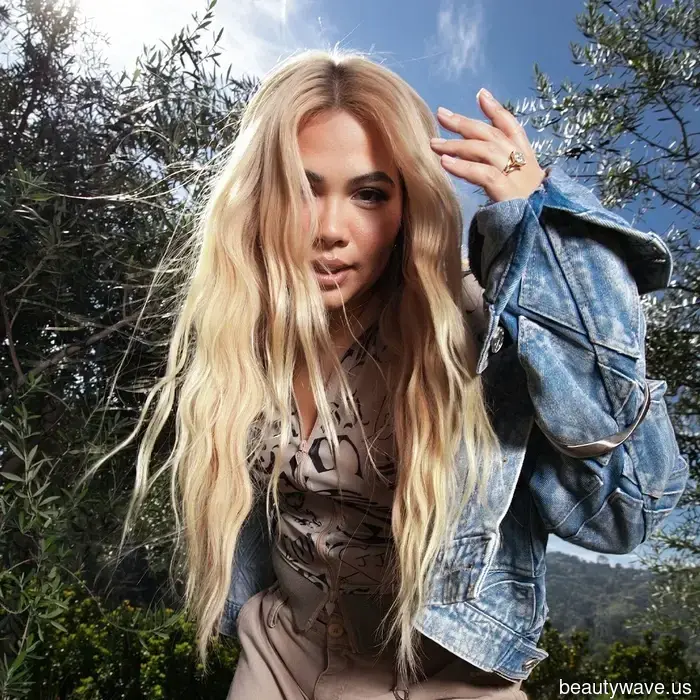
"Girls Like Girls" is Hayley Kiyoko's heartfelt message to her younger self.
In 2015, Hayley Kiyoko released her single "Girls Like Girls," accompanied by a viral music video featuring Stefanie Scott as Coley, a 17-year-old girl grappling with feelings for her female friend Sonya (Kelsey Chow). This empowering anthem for queer women became a significant hit for Kiyoko. Since then, the video has garnered 163 million views on YouTube and over 171,000 comments, with many fans urging her to expand the teen dream universe she crafted. In 2023, Kiyoko published "Girls Like Girls," a number one New York Times best-selling novel celebrated for its depiction of sapphic youth, though her ultimate goal was to develop a feature-length film. After eight years of effort, "Girls Like Girls" is finally set to hit theaters this month. Kiyoko sees the film as the most genuine rendition of the story of Oregon teens Coley and Sonya. Similar to the original music video, the film is directed by Kiyoko and features fresh talent in lead roles, with Maya da Costa and Myra Molloy delivering impressive performances filled with emotional depth. The film resonates with anyone who has experienced the intense emotions of a crush, beautifully capturing that journey through a nostalgic perspective and a summer-themed soundtrack. In its final iteration, Kiyoko's "Girls Like Girls" represents her vision at its finest.
(Image credit: Grace Scuitto) Reflecting on writing your 2015 viral hit "Girls Like Girls," what did it symbolize for you back then? It was a rainy day in Los Angeles in 2015 when I recall one of my co-writers, [Lily-May Young], asked, "What’s the thing you’re most afraid to share with the world?" I teared up and admitted, "I’m gay." It marked the first time I had truly come out to my colleagues, and together, we crafted a song about aspiring to feel self-assured and capable of "stealing kisses from your missus." It embodied my desire for confidence in self-love and self-worth. It’s astonishing to see how that initial spark grew into the music video, the book, and now the truest version of the story, which is the feature film. What inspired the transition from music video to novel? Why choose that format? The overwhelming feedback, with comments like "We need this as a feature film" and "I want to know more," highlighted a significant gap in media representation for sapphic women that I felt compelled to address. I was thrilled to expand Coley and Sonya’s story and to weave my personal experiences of falling in love with a girl in high school into their narrative. I felt it was vital to showcase that representation, especially as a half-Japanese, half-white individual growing up in Los Angeles. In the book, I made Coley half Japanese and half white to explore her inner struggles more deeply. Growing up queer, particularly while concealing that identity, creates a silent journey as you share little with those around you, so the book truly became a medium for expressing my experiences as a queer teenager navigating the complexities of young love and its life-or-death intensity. When you fall for someone, it feels monumental, as if you're thinking, "I’ll marry this person." Therefore, when I finally had the opportunity to direct the film, I approached it from a mature perspective. Although our main characters are young women, you feel as if you’ve lived so much at 16 or 17—it’s crucial to capture that sense of maturity in storytelling.
I understand it took around eight or nine years to get the film greenlit. What were some obstacles you encountered during that period? Many people don’t grasp the filmmaking process and the duration and challenges involved in reaching that point. Questions arose like how to craft a compelling story, fund it, and gain the trust of investors as a first-time director willing to take a risk on a narrative that perhaps a community wants to see. For eight years, I faced countless rejections and uncertainties, including near shoots that fell through due to funding issues or location changes. Finally receiving the green light felt like a triumphant culmination of that journey.
(Image credit: Grace Scuitto) Your directorial debut was the "Girls Like Girls" music video, and now your first feature-length directing credit is the "Girls Like Girls" film. How have you evolved as a director and artist during this time? I began directing out of necessity when I co-directed "Girls Like Girls" with Austin Winchell back in 2015, and it opened my eyes to my love for directing—I had been doing it all along without realizing it. Since then, I directed 11 of my own music videos and developed a passion for storytelling and world-building. Yet, as a woman of color, I faced the challenge of establishing myself in feature film direction and fostering the necessary trust from collaborators to embark on
Other articles
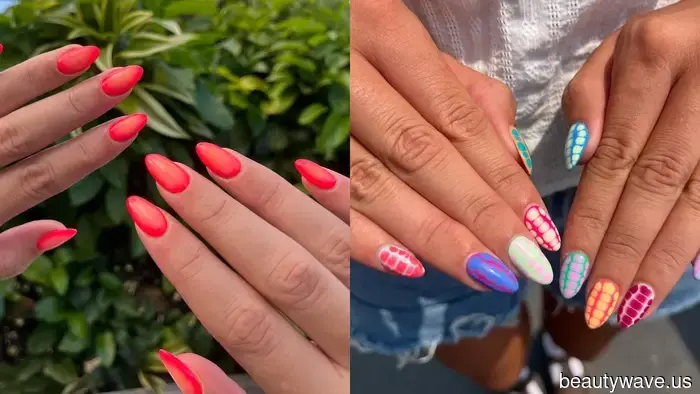 I've been saving ideas for vibrant summer nails—12 designs I'm including on my manicure wish list.
Radiant, striking, and attention-grabbing! Check out 12 ideas for colorful summer nails to inspire your upcoming manicure.
I've been saving ideas for vibrant summer nails—12 designs I'm including on my manicure wish list.
Radiant, striking, and attention-grabbing! Check out 12 ideas for colorful summer nails to inspire your upcoming manicure.
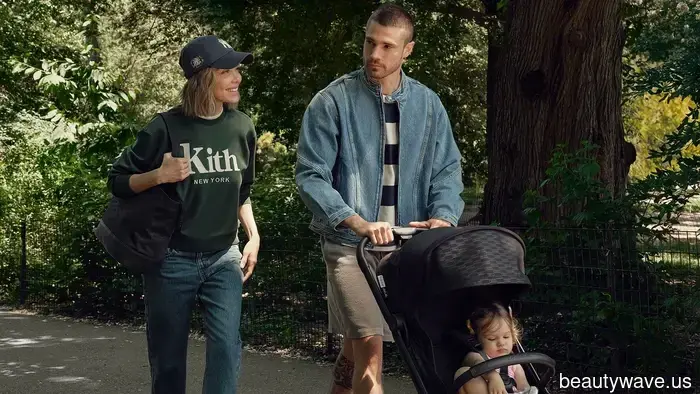 As a parent working in the fashion industry, I find this collaboration on designer strollers to be absolutely fantastic.
Alright, Bugaboo and Kith.
As a parent working in the fashion industry, I find this collaboration on designer strollers to be absolutely fantastic.
Alright, Bugaboo and Kith.
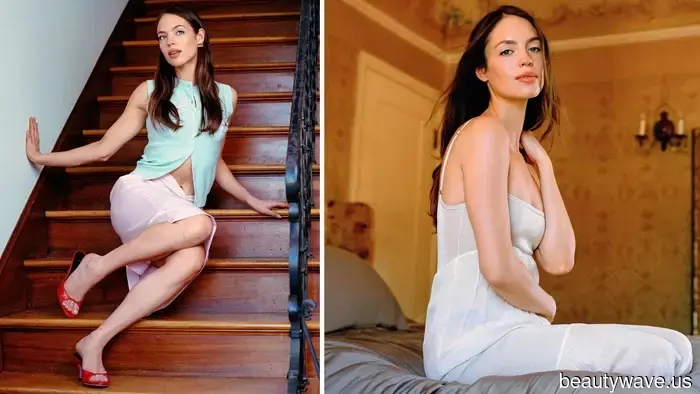 Whatever Claudia Sulewski is promoting, we're all in for it.
The founder of Cyklar, who is also an actress and director, is an exceptional storyteller.
Whatever Claudia Sulewski is promoting, we're all in for it.
The founder of Cyklar, who is also an actress and director, is an exceptional storyteller.
 Kaia Gerber Recently Shared with Me Her Complete Shower Routine and Top Secret for Achieving a Red Carpet Glow.
*Places in cart*
Kaia Gerber Recently Shared with Me Her Complete Shower Routine and Top Secret for Achieving a Red Carpet Glow.
*Places in cart*
 Kaia Gerber Just Shared Her Complete Shower Routine and Top Secret for Achieving a Red Carpet Glow.
*Puts in the cart*
Kaia Gerber Just Shared Her Complete Shower Routine and Top Secret for Achieving a Red Carpet Glow.
*Puts in the cart*
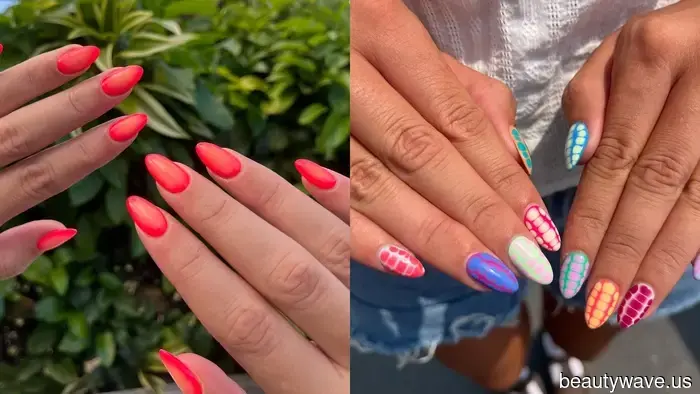 I’ve been saving ideas for vibrant summer nails—12 designs I’m adding to my manicure wish list.
Lively, striking, and attention-grabbing! Check out 12 suggestions for vivid summer nails to inspire your upcoming manicure.
I’ve been saving ideas for vibrant summer nails—12 designs I’m adding to my manicure wish list.
Lively, striking, and attention-grabbing! Check out 12 suggestions for vivid summer nails to inspire your upcoming manicure.
"Girls Like Girls" is Hayley Kiyoko's heartfelt message to her younger self.
Who What Wear interviews Hayley Kiyoko regarding her journey of transforming her 2015 hit single "Girls Like Girls" from a viral music video into a bestselling novel and then into a feature film.