
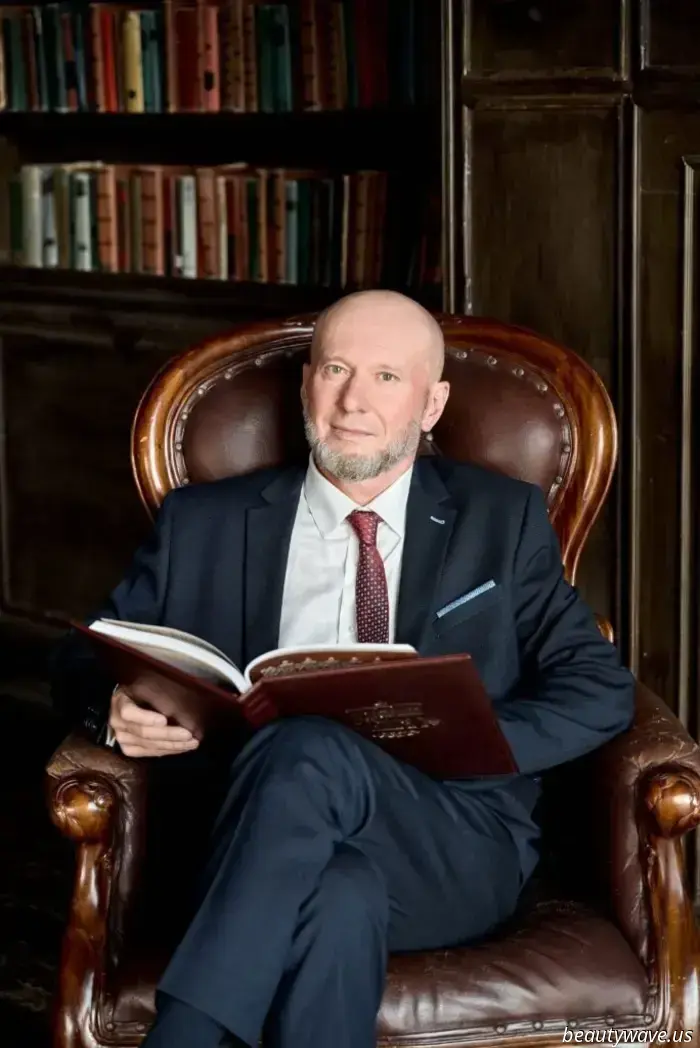
Alexander Vziraev: A family's history is the prism through which a person's core life principles and points of reference are formed.
"Do not forget your kin, your past; study your grandfathers and great-grandfathers, work on preserving their memory... Try to record everything you can about your clan, family, home... Try to collect portraits, autographs, letters, printed and manuscript writings of all those who were connected to the family, to the clan... Let the whole history of the clan be preserved in your home and let everything around you be steeped in memories... Do not seek power, wealth, influence... These things are not natural to us; in a small measure they will come by themselves — in the measure that is needed. Otherwise life will become boring and burdensome..." wrote the priest Pavel Florensky in his "Memories of Past Days."
The wise words of the theologian and philosopher now sound almost like a dissonance. Most of us are precisely occupied with the pursuit of wealth and power. And the family tree seems like a planet located many light-years away. Whether this is so or not, we decided to ask the founder and director of the International Private Genealogical Agency "Connection of Generations," Alexander Vziraev.
The conversation turned out to be curious and instructive.
— Alexander Valentinovich, in earlier times people hid their origins; the well-known actor Pyotr Velyaminov was of boyar descent but played collective-farm workers his whole life, the Soviet children's poet Vladimir Mikhalkov, author of the USSR anthem, had noble roots. When did genetic memory begin to awaken?
— The events of the 20th century contributed to people preferring not to speak about their roots. Revolutions, wars, repressions forced our ancestors to hide information about noble origins. "Let us renounce the old world..." And so they renounced their past, their genealogy. Each new generation became the beginning of its own story, and each new generation denied the merits of its ancestors. Yet a society in which family history, ancestral traditions and values are forgotten invariably declines and collapses. Thus the Soviet Union — a huge, great country that endured so many trials — ceased to exist.
After the collapse of the USSR the situation changed to the opposite. Archives were opened for the study of genealogical documents; many documents were declassified. Now people consciously seek noble roots. Some are disappointed when in the course of research it turns out that their ancestors were of the peasant estate. Although for every person it is important to know who their ancestors were regardless of estate. For example, among my ancestors there were no nobles or historical figures, but that does not at all diminish my joy when I find information about each member of my family.
— Why is it so important to know your origins, to delve into the "dark past," into the depths of centuries?
— Why "dark"? Life is varied. The history of our ancestors is a history of heroism and suffering, victories and defeats, which teaches us not to give up in the face of difficulties and to believe in the strength of spirit. Family history is the prism through which a person's basic life principles and guidelines are formed. Knowledge about one's ancestors and their lives helps to understand oneself better.
When a person begins to study the history of their clan, they feel the presence in their life of guardian angels — their great-great-ancestors. They understand that they are not alone; behind them stands their Kin. Just think: each of us is the result of thousands of lives, because for us to have come into being it took more than four thousand ancestors over 12 generations!
It may seem incredible, but indeed for many people, after they begin researching their genealogy, very important events occur in their lives: families are formed, children are born, relatives are found.
And most importantly, compiling your family tree is an opportunity to say thank you to all your ancestors for having existed. For the fact that we are.
— A genealogical tree resembles the Biblical Tree of Knowledge; is it not dangerous to pick the apple? What if it overturns a normal way of life?
— Yes, I said above that indeed changes occur in the lives of our clients; there can be significant transformations. According to the Bible, Adam and Eve were expelled from Paradise because they disobeyed and did not follow the commandment given by the Lord. But the Bible also contains the genealogy of Adam in the Old Testament. The New Testament opens with the Gospel of Matthew. And it, in turn, begins with the Genealogy of Jesus Christ.
So if we draw an analogy with the Biblical Tree of Knowledge of good and evil, then we are commanded to KNOW our genealogy, and renouncing one's history is a violation of the commandment.
— You create a Family Genealogy Book — how is the work on it carried out, how many specialists and of what kind work on its compilation?
— The Family Genealogy Book is the result of painstaking work by various specialists, such as a scientific supervisor, a historian-archivist, a genealogist, researchers, a designer, an artist/layout artist, an editor, a writer, etc.
Its creation takes place in several stages:
— Conversation with the client to obtain already available information about their clan (family legends, recollections, letters, photographs) from which subsequent searches can proceed;
— Study of archival documents (metric books, population censuses, etc.), which may contain data about the client's forebears;
— Genealogical trips — visits to places where members of the researched clan were recorded as living, with the aim of obtaining additional information about their fate;
— Systematization and analysis of the obtained data, drawing up a book plan and a report on the work done;
— Based on the results of the research work, a professional writer composes a historical-literary narrative about the history of the Clan;
— Development of the book design. Typesetting of an individual book layout, selection and ordering of a custom cover, book assembly and delivery to the client.
— In the end: a person learns their genealogy, but how does this help them in everyday life; what practical use do the obtained insights have?
— It may seem that knowing one's genealogy is a useful but entirely optional matter. This is not so. Very often information about one's origins becomes vitally important to a person.
Researching one's genealogy becomes a reason to establish contact with relatives and to begin communicating with distant relatives about whom a person previously had no idea.
Genealogical information contained in archives combined with modern DNA technologies makes it possible to detect hereditary pathologies. Using these data, a person can make informed decisions regarding their health and lifestyle.
Undoubtedly, searching for information about ancestors and studying one's genealogy can also be useful in resolving various legal issues, such as inheritance, repatriation, and others.
— Are there cases when the partially revealed veil of mystery frightens the client, and they do not want to know what happened to their ancestors in the past?
— No; as a rule, people come with a request to confirm family legends or secrets. Often ignorance, on the contrary, prompts people to study their Clan.
— Why was the former host of the program "In the World of Animals," Nikolai Drozdov, chosen as the face of your project?
— Nikolai Nikolaevich is a member of our expert council. Along with him, the expert council includes many of the country's most honorable people. I met Nikolai Nikolaevich many years ago in connection with the study of the Genealogy of Saint Philaret of Moscow.
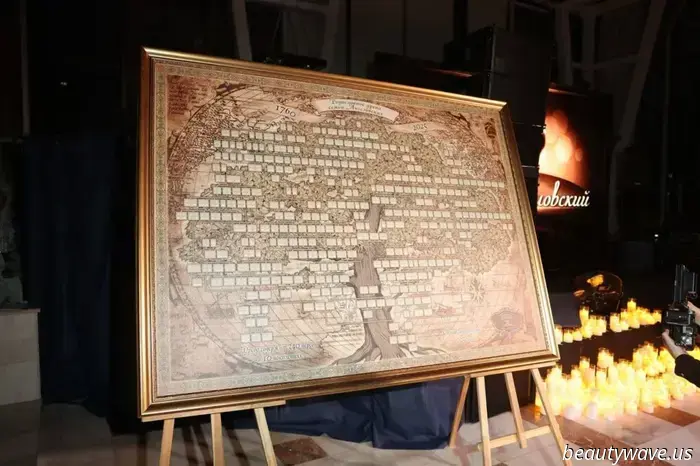
By the way, recently we completed work on creating the family tree of the Clan of Saint Philaret (Drozdov), Metropolitan of Moscow and Kolomna, covering the period from 1653 to 1931 and containing 384 persons in eleven generations.
At the beginning of August this year we presented the Family Tree of Saint Philaret to the Cathedral of Christ the Saviour.
— Countess Pugacheva, Prince Kirkorov... If everyone suddenly finds out that they are of royal blood, who will work then? What is the social profile of your clients?
— You know that estate divisions were abolished by decree in November 1917. Along with them, all estate privileges and restrictions were also abolished.
Among our clients there are those whose ancestors were connected to the Naryshkin, Golitsyn, Obolensky, Suvorov, Nakhimov families and other famous houses. These are respectable people, scholars, people of various professions who work all their lives.
Our clients are mature, accomplished people. They want to study the history of their family and pass this heritage on to future descendants.
But lately more and more of the younger generation are turning to us to study their genealogy.
— Your favorite books, fiction that emphasizes the importance of a large, branched genealogy?
— The most interesting books for me are the results of our genealogical research. Sometimes life events unfold so unpredictably and surprisingly that even the most talented writers and screenwriters could not have invented such a plot.
As for fiction — the brilliant works of L. N. Tolstoy (above all "War and Peace"), F. M. Dostoevsky ("The Brothers Karamazov"). One can also include "The Forsyte Saga" by John Galsworthy and others.
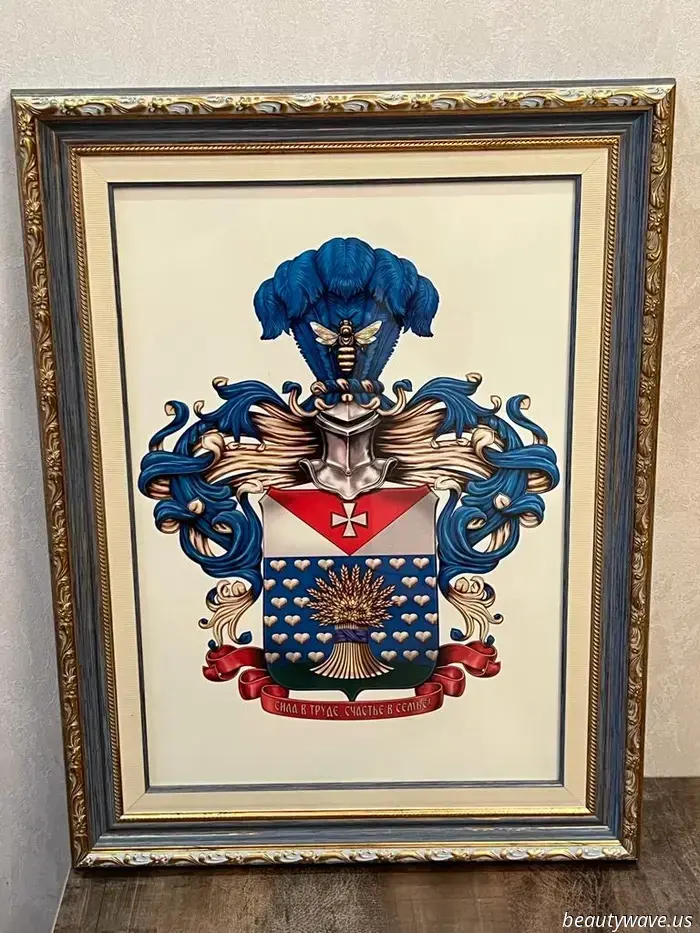
— How can one order a genealogical research, the creation of a family tree book, tree or coat of arms?
— Anyone from anywhere in the world can do this by calling: 8 (800) 550-59-98, +7 (929) 967-30-87, or by leaving a request on the website
https://genfamily-matters.com or https://heraldic.genfamily-matters.com
We are located at:
Moscow, Metro Avtozavodskaya, BC "Omega Plaza", Leninskaya Sloboda St., 19, office 2031
St. Petersburg, Metro Nevsky Prospekt, Griboedov Canal Embankment, 19, office 3
E-mail: [email protected]

Other articles
Alexander Vziraev: A family's history is the prism through which a person's core life principles and points of reference are formed.
"Do not forget your lineage, your past; study your grandfathers and great‑grandfathers; work on preserving their memory... Try to record everything you can about the past of your family, your household... Try to collect portraits, autographs, letters, printed and handwritten writings of all those who were connected to the family, to the lineage... Let the entire history of the family be secured in your home, and let everything..."