

Key Clients Are Dictating Trends in Luxury, so Who Is Fashion Truly Designed For?
The appointment is set for before the show, rather than afterward. In a quiet suite located several floors above the runway venue, racks featuring a new collection await untouched by editors, influencers, and critics. The garments remain unphotographed, unsent to Instagram, and unrated. Yet, some pieces have already been sold. A private stylist searches through the racks, video calling the daughter of a wealthy businessman who is in a different time zone. These items—coats adorned with crystals, handbags fitted with 24-karat gold hardware and exotic leather—could cost tens of thousands of dollars or even exceed our annual earnings. For this significant client, such amounts are merely a fraction of an extensive shopping budget.
These clients, commonly referred to as VICs in the industry, make up a small portion of fashion's audience but increasingly influence its trajectory—provided they continue to spend. A 2024 case study by Business of Fashion indicates that the top 2% of luxury consumers may generate nearly half of a brand's annual revenue, a figure that can rise even higher at multi-brand luxury retailers like Luisaviaroma and Mytheresa, with the latter citing over $400 million of its 2024 sales to these VICs, as reported by Vogue. The industry's dependence on VICs has intensified in recent years, with the influence of these ultra-wealthy individuals growing as overall consumer confidence declines. Amid rising recession concerns and financial instability affecting discretionary spending, the so-called luxury slump has created anxiety surrounding every collection launch and quarterly earnings report. In certain scenarios, losing a single top-tier client can equate to a loss of millions in yearly revenue.
For brands, the solution to maintaining revenue is clear: invest more in wooing VICs and their deep pockets. This leads to an emphasis on exclusive access that cannot be live-streamed, liked, or accessible to the general public. Consider extravagant shopping excursions to flagship boutiques, intimate dinners with creative directors and their teams, and exclusive front-row invitations to high-profile runway shows.
Luxury brands like Cartier, Chanel, Hermès, Louis Vuitton, and Bulgari employ concierge teams that collaborate with sales associates to create and implement unique luxury experiences for high-spending clientele. Additionally, brands are creating transitional third spaces aimed at VICs, such as Gucci’s invite-only salon on Melrose Avenue in Los Angeles, designed to attract select clients.
They don’t merely purchase products for their closets or for fancy charity events, explains fashion commentator and strategist Jay Choyce Tibbitts. Instead, VICs are investing in access to designers, ateliers, and a world that is out of reach for 98% of shoppers. "Demonstrating the value of joining a brand's world as a VIC has become increasingly crucial," Tibbitts notes. "Previously, these individuals would buy whatever the brand suggested just to feel accepted, but now, as they become more selective with their spending and as the number of people able to shop at this level diminishes, brands must compete for this same clientele."
In essence, the historical luxury hierarchy—where a brand determined what was purchased and sold based on a designer’s aesthetic—is shifting. VICs are now influencing what is being created from the outset, their expenditures acting as votes on what should remain and what should be discontinued. When a particular brand or product category sees increased spending, a label will gradually begin to offer more products in response to that demand.
This situation extends further; insiders and stylists have suggested that some brands risk facing issues if new creative directors fail to align with the visions desired by high-end clients. A single change in leadership can lead to a revenue drop of tens of millions if the collections fail to capture VICs' interest. When such a small number of shoppers account for a significant portion of a brand's income, luxury houses can no longer treat them as average customers.
While it is transactional, it is ultimately a mutually beneficial arrangement. How can I fulfill this client’s needs by providing access to a runway look, and how can they help me achieve my sales goals?
But how do these VICs shop? For many, it seldom involves simply walking into a boutique and browsing. Dubai-based fashion editor and personal stylist Amrita Singh, who works with ultra-wealthy individuals, describes her process as a mix of sourcing and strategy. Many of her clients shop entirely remotely. Singh takes photos of clothing, sends them to her clients, and asks for payment once they confirm their choices. In this capacity, she serves as both stylist and stand-in. Some clients are too busy, shielded, or otherwise preoccupied to visit a store in person. That's where Singh comes into play.
Items are sold prior to their public release, with special orders for beaded dresses and couture gowns made months in advance. Strong relationships with sales associates and brand executives are carefully built and maintained. Singh has attended private re-sees, sat front row at shows, and been flown to spend long weekends in


Other articles
Previously, a five-star hotel and sophisticated gastronomy were signs of luxury. Today, the new status symbol is a resourceful body and a clear mind. The most sought-after formats of leisure for entrepreneurs, top managers, and the creative industry now look like this: • detox programs • sleep recovery • anti-stress protocols • medical check-up programs • recovery from overloads Essentially, this is medicine disguised as leisure — without hospital corridors and strict...
The new luxury is not things, but energy.Previously, a five-star hotel and sophisticated gastronomy were signs of luxury. Today, the new status symbol is a resourceful body and a clear mind. The most sought-after formats of relaxation for entrepreneurs, top managers, and the creative industry now look like this: • detox programs • sleep recovery • anti-stress protocols • medical check-up programs • recovery from overloads Essentially, this is medicine disguised as relaxation — without hospital corridors and strict...
A sacred place where silence lives: The Les — a space where rest becomes a state of the soul.Just 45 minutes from Moscow, there is a space where time slows down, the phone ceases to be the center of attention, and the main value becomes the simple feeling of happiness and tranquility. In the modern world, rest is increasingly associated not with noisy resorts, but with the opportunity to pause. This idea is the foundation of the concept of the country complex The Les, located in the picturesque Dmitrovsky district...
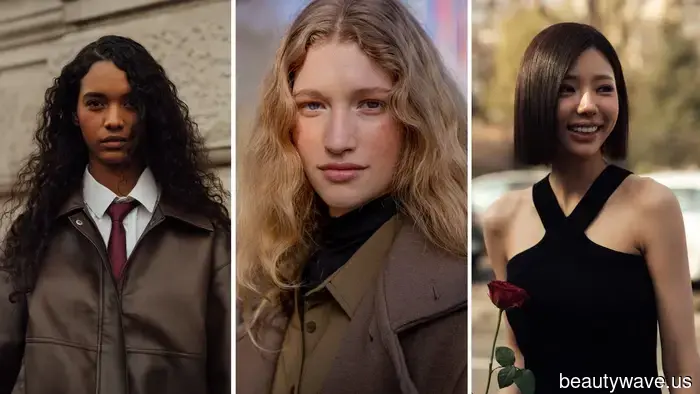 The Parisian fashion crowd has just announced the 16 most stylish hair trends for spring.
Seen at Paris Fashion Week.
The results of the United Talents Award 2026 have been summarized.
The Parisian fashion crowd has just announced the 16 most stylish hair trends for spring.
Seen at Paris Fashion Week.
The results of the United Talents Award 2026 have been summarized.
The United Talents Award international prize annually celebrates the best figures in business, art, and social projects at the Chamber of Commerce and Industry. Over the past few years, the organizing committee has created a unique platform for multicultural dialogue and interaction. At the closed social event, one could see not only entrepreneurs but also diplomatic figures from Russia, the CIS, the UAE, African, European, and Asian countries, as well as…
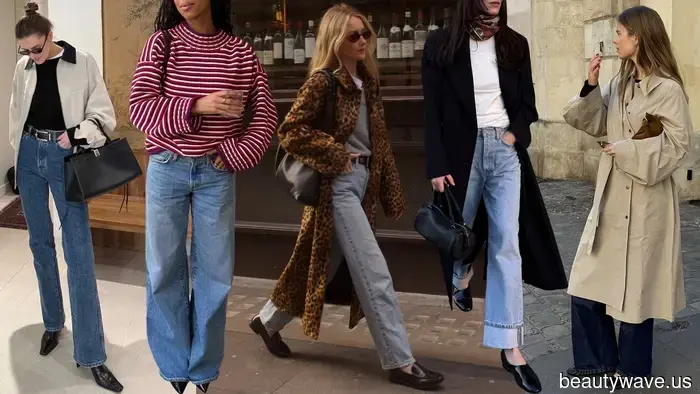 How Fashion Enthusiasts Worldwide Are Styling the Newest Denim Trends
Stylish jeans ensembles from New York City to Paris.
How Fashion Enthusiasts Worldwide Are Styling the Newest Denim Trends
Stylish jeans ensembles from New York City to Paris.
Key Clients Are Dictating Trends in Luxury, so Who Is Fashion Truly Designed For?
Explore the realm of fashion's key clients and how the leading spenders are influencing the luxury market.