

Why Women Live Against the Cycle and Burn Out: When Procrastination Is Not Laziness, but a Phase of the Cycle
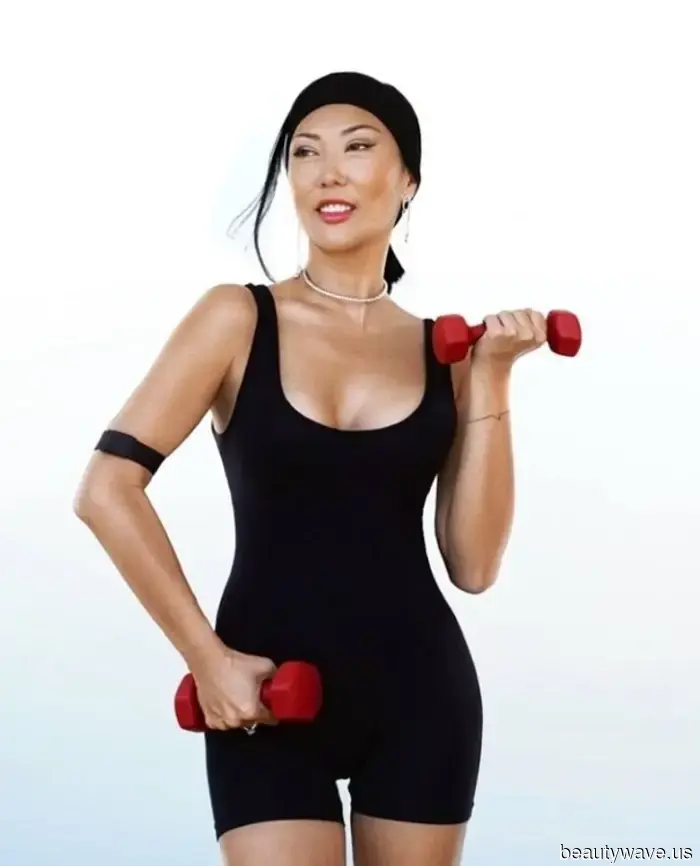
There are days when you feel like you can move mountains: there are many tasks, thoughts are sharp, plans are easily made, and things seem to get done by themselves. And then it feels like someone has quietly turned down the brightness: everything is the same, but there’s less energy, focus blurs, familiar tasks suddenly become heavy, and your hands reach not for the laptop, but for a blanket. In such moments, a woman often does what she has been taught: she pushes herself. "Get it together." "Stop whining." "You can rest later." And this is where the road to burnout begins, not because of a lack of discipline, but because the body operates in cycles while the demands on oneself remain linear. If you continue to live in "burst mode," the body activates its defense: it reduces energy, shuts off motivation, and forces you to slow down. Wellness influencer, biohacker, and longevity researcher Natalia Kim explains why procrastination can be a signal of a cycle phase rather than laziness, and how to restructure life without guilt.
"Extracting maximum efficiency from yourself in the long term is a losing strategy when it comes to the female body. Even if sleepless nights seem not so terrible, and working without weekends will one day allow you to enjoy a worry-free vacation, these illusions trap you in a cage of self-flagellation when the body protests against such a regime and shuts down energy to the point that, at best, you end up in an emotional pit, and at worst, depression. In stress, the body chooses survival over recovery. The concept of living in rhythm with the cycle returns stability to women: instead of self-criticism, there is an understanding of when a burst of energy is needed and when it is important to take care of oneself. This is about energy, youth, and health, not excuses," notes wellness influencer, biohacker, and longevity researcher Natalia Kim.
Procrastination as a signal, not a vice
Procrastination is often interpreted harshly: "I can't get it together," "I drag it out until the last minute," "I'm just lazy." At this moment, a chorus of advisors instantly forms around: some diagnose, some preach, and some simply suggest discipline. But the female body has periods when the brain genuinely switches to another mode. Stress tolerance decreases, the need for a pause increases, and the reaction to external stimuli intensifies. And then the attempt to live as usual causes internal resistance: the psyche chooses the simplest form of self-defense—avoidance.
In this sense, procrastination can be seen not as a weakness but as an attempt by the system to conserve resources. The problem arises when self-blame kicks in instead of adjusting the regime. Self-criticism adds stress, which increases fatigue and restarts the cycle.
Why women burn out faster when they ignore the cycle
Burnout rarely slams the door. More often, it sneaks up quietly: sleep becomes shallow, recovery slow, irritability habitual, and concentration short-lived. The body starts to retain water, heaviness appears, and even favorite activities no longer bring joy. This is not necessarily about drama. Sometimes it’s just life under constant internal tension, without considering that the body operates in different energy modes during different phases of the cycle.
If during a resource depletion period you continue to maintain peak load, the body compensates at the cost of recovery. From the outside, it looks like "I have no strength," "I don't want to," "I can't." It's as if there’s an overflowing battery of stress inside that doesn’t have time to discharge.
The cycle as navigation: four phases—four moods of resource
The cycle can be conveniently perceived as an internal calendar that indicates not only about the body but also about behavior: when it’s easier to start something new, when it’s simpler to be in the spotlight, and when it’s wiser to slow down and take care of the nervous system.
Follicular phase (on average from the start of menstruation to ovulation)
Many women gradually experience an increase in energy, find it easier to engage in tasks, and make decisions more quickly. This is a period when it’s easier to start projects, conduct complex negotiations, plan, and try new things. Procrastination often decreases on its own during this time because resources are naturally higher.
Ovulation (short peak of the cycle)
The time of maximum social engagement and confidence: it’s easier to communicate, perform, negotiate, and be noticeable. The brain works faster, and many tasks are resolved more easily than on other days.
Luteal phase (after ovulation until menstruation)
Sensitivity to stress often increases, mood swings may occur, appetite changes, and tolerance for overload decreases. This is not a "breakdown of discipline," but a change in mode. In this phase, supportive strategies work well: more structured routines, less chaos, fewer abrupt decisions, more sleep, and restorative habits.
Menstrual phase (start of the cycle)
For many women, resources are lower, attention becomes more scattered, and there’s a heightened need for pauses and silence. During this period, procrastination is especially often a direct signal: the system is asking for a reboot. The task is not to force yourself to "overcome the body," but to give it the opportunity to recover.
How to distinguish laziness from physiological decline
Laziness is usually stable: you don’t want to do anything, ever. A phase decline looks different: there’s a feeling that efforts are too costly, familiar tasks take more time, and any little thing tires you out faster. At the same time, motivation returns when the phase, sleep, stress level, and regime change.
Another marker is the reaction after rest. If a short pause, walk, sleep, or reduced load restores clarity, it’s more about resources than character. If rest doesn’t help for weeks, then it’s worth looking deeper: at chronic stress, sleep quality, nutrition, overloads, and overall life strategy.
Living in rhythm with the cycle as an anti-stress strategy for youth
Living in rhythm with the cycle does not negate ambition and does not turn a woman into a hostage of the calendar. It’s a way to stop fighting with physiology and start living in a way that resources do not burn out in strain. When the load is distributed wisely, the "swings" of energy and mood decrease, the feeling of constant racing diminishes, sleep stabilizes, and maintaining a steady rhythm becomes easier.
That’s why the topic of reproductive health is broader than just motherhood. The hormonal system affects the condition of the skin, hair, mood, energy levels, and stress resilience. The longer this system operates not in a state of anxiety but in balance, the longer what is called youth in glossy magazines is preserved: lightness, clarity, vibrant tone, and inner support.

Other articles
 Within the Scandi supermodel beauty sector that inspired countless no-makeup makeup styles.
From the shelves of skincare products to the stands at the Copenhagen International Fashion Fair, Scandinavian beauty is finally receiving the recognition it deserves. Is the wider beauty industry prepared to keep pace?
Within the Scandi supermodel beauty sector that inspired countless no-makeup makeup styles.
From the shelves of skincare products to the stands at the Copenhagen International Fashion Fair, Scandinavian beauty is finally receiving the recognition it deserves. Is the wider beauty industry prepared to keep pace?
 Why women live against the cycle and burn out: when procrastination is not laziness, but a phase of the cycle
There are days when you feel like you can move mountains: there are many tasks, thoughts are sharp, plans are easily made, and things seem to get done by themselves. And then it’s as if someone has quietly dimmed the brightness: everything is the same, but there’s less energy, focus blurs, familiar tasks suddenly become heavy, and hands reach not for the laptop, but for a blanket. In such moments, a woman most often does...
 Exploring the Scandi Supermodel Beauty Industry that Inspired a Thousand No-Makeup Makeup Styles
From skincare displays to the stalls at the Copenhagen International Fashion Fair, Scandinavian beauty is finally receiving the spotlight it deserves. Is the wider beauty industry prepared to keep pace?
Exploring the Scandi Supermodel Beauty Industry that Inspired a Thousand No-Makeup Makeup Styles
From skincare displays to the stalls at the Copenhagen International Fashion Fair, Scandinavian beauty is finally receiving the spotlight it deserves. Is the wider beauty industry prepared to keep pace?
 Inside the Scandinavian Supermodel Beauty Industry That Inspired Numerous No-Makeup Makeup Styles
From skincare shelves to the stands of the Copenhagen International Fashion Fair, Scandinavian beauty is finally receiving the recognition it deserves. Is the broader beauty industry prepared to keep pace?
Inside the Scandinavian Supermodel Beauty Industry That Inspired Numerous No-Makeup Makeup Styles
From skincare shelves to the stands of the Copenhagen International Fashion Fair, Scandinavian beauty is finally receiving the recognition it deserves. Is the broader beauty industry prepared to keep pace?
 Construct a constellation and ask the astronaut: how will April 12 be celebrated at "Dream Island"?
The cultural and entertainment cluster "Island of Dreams" has prepared a special program for Cosmonautics Day. On April 12, 2026, an open program of the International Techno-Scientific Educational Forum (TSEF) will take place in the urban promenade space with the participation of BRICS countries. The event will unite science, education, and live communication with experts in the space industry. Guests will be treated to a concert by students of the Dominik Joker School JockerSchool on the central stage. The program will continue with...
Why Women Live Against the Cycle and Burn Out: When Procrastination Is Not Laziness, but a Phase of the Cycle
There are days when you feel like you can move mountains: there are many tasks, thoughts are sharp, plans are easily made, and things seem to get done on their own. And then it feels like someone has quietly dimmed the brightness: everything is the same, but there is less energy, focus blurs, familiar tasks suddenly become difficult, and hands reach not for the laptop, but for a blanket. In such moments, a woman most often does...