
.jpg)
Mel Robbins' 7-Day Reset (Supported by Research)
Getting to a place of feeling "well" often resembles Charlotte York avoiding the self-help section of a bookstore (“There it was: the self-hell aisle…”); regardless of the good intentions behind it, self-improvement can be daunting and even induce feelings of shame. Therefore, it's no wonder that Mel Robbins, a bestselling author, podcast host, and motivational speaker, has continually gone viral for her practical and straightforward advice. From Oprah to TikTok influencers, people are enamored with her insights. She has introduced concepts like the “High 5 Habit,” a five-step evening routine, along with several other strategies to help us enhance our best selves (the “Let Them Theory” has me captivated).
Equally important is her “Seven-Day Reset for More Time, Energy, and Happiness.” In a recent episode of her podcast, Robbins outlined actions to take over seven days to “reclaim your time, energy, and focus,” a culmination of a decade’s research. If you find yourself wondering, Why am I always tired? Why don’t I have time for myself? Why can’t I concentrate? Why can’t I make progress on what matters to me? consider her seven-day plan as “your reset button” and a roadmap to regain control. “You’ll transition from feeling scattered and drained to calm, focused, and prepared for whatever comes next,” Robbins said. I took thorough notes for you. Here are seven research-backed habits she recommends—use them for a week-long reset or integrate them into your weekly routine.
Mel Robbins’ Seven-Day Reset
1. Perform a brain dump
Some individuals can easily drift off to sleep immediately, but I struggle to quiet the relentless thoughts racing in my mind (Did I respond to that email? Did I store the leftovers correctly? I need to schedule a check-up…). Robbins’ remedy, which she has employed when feeling overwhelmed, is akin to “mental vomiting.” “You’re going to take everything weighing on your mind and transfer it onto a piece of paper,” she explained. Having trouble sleeping? Brain dump. Experiencing the Sunday Scaries? Brain dump. Overwhelmed by your tasks? Brain dump.
Grab a piece of paper and jot down whatever comes to mind. Resist the impulse to edit (is it just me?), and let everything flow onto your journal or Post-it Notes (one of Robbins’ preferred methods for brain dumps)—even if it seems random or trivial. Once you’ve emptied your mind, you can release it. “One reason a brain dump is so freeing is that each time you write something down, you feel space in your mind open up,” she said. “You’ll also realize, ‘I carry so much with me,’ and you’ll be astounded by your mental capacity.” Make brain dumps a regular practice, and she guarantees you’ll feel lighter and freer.
2. Free yourself
This leads us to the second task on the list for preparing for a productive week: you will free yourself. Sounds great in theory, but what does it really mean? You’ll notice that some (often most) of the items from your brain dump are not tasks for this week, yet you’re still holding onto them. Robbins advises you to eliminate these holdovers by crossing them off: “There’s so much on that list that you have no intention of addressing this week. Just cross it out. Grab a Sharpie and cross it right off.”
You’re going to shed the burden of tasks that don’t require immediate attention (that is, tasks you won’t be doing this week) without any guilt. Organizing your closet, clearing your inbox, or picking up dry cleaning can wait. By letting them go (at least for now) and sticking to that decision, Robbins suggests you are stating, “You’re not taking up space in my mind this week. No thanks.” “You’re creating space in your mind, body, and energy by not carrying these things around,” she added. “Cross off everything you’re not tackling this week. See that? You’re in control.”
3. Set one priority
After expressing everything in writing and shedding unnecessary tasks, you’ll have a list of items that you still care about. Robbins encourages you to review this list and ask yourself: Out of all the remaining tasks, what is the one thing that, looking back next weekend, would truly enhance my week? Is it responding to emails? Sorting laundry? Baking cookies for a friend in need? “There’s something meaningful on that list,” Robbins said. “This is your moment to be selfish. This is where you identify what you genuinely wish to make time for.”
Before you start thinking you don’t have time, Robbins points out that when you choose that one important thing, you’re not committing to completing it 100%; rather, you’re promising to make progress. If you choose to manage your inbox, for example, you don’t have to clear it completely. You only
.jpg)
.jpeg)
Other articles
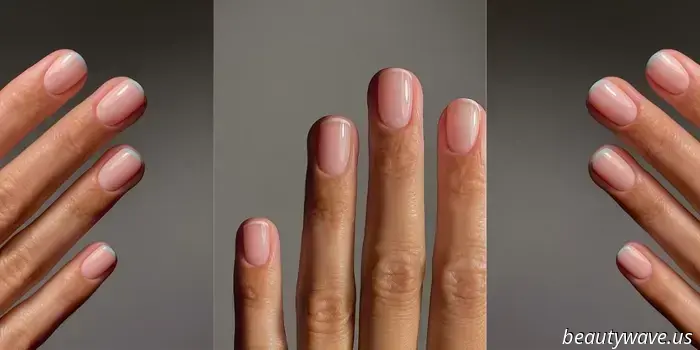 The French manicure received a subtle, contemporary update just as summer approaches.
discover the micro French
The French manicure received a subtle, contemporary update just as summer approaches.
discover the micro French
 You're Not Tired of Your Work Wardrobe; You Simply Need to Experiment with These 5 New Styling Techniques.
Putting on work clothes has become much simpler.
You're Not Tired of Your Work Wardrobe; You Simply Need to Experiment with These 5 New Styling Techniques.
Putting on work clothes has become much simpler.
 I Experimented with Pleasure Mapping and Now I Experience Orgasm Every Time.
A writer discusses her experience with pleasure mapping, highlighting its benefits for enhancing sexual satisfaction and providing tips on how to try it for yourself.
I Experimented with Pleasure Mapping and Now I Experience Orgasm Every Time.
A writer discusses her experience with pleasure mapping, highlighting its benefits for enhancing sexual satisfaction and providing tips on how to try it for yourself.
 These Stylish New Zara Shorts Are More Fashionable Than Your Denim Cut-offs.
Promise.
These Stylish New Zara Shorts Are More Fashionable Than Your Denim Cut-offs.
Promise.
 My 30-Year-Old Best Friend Requested Stylish Clothing Suggestions—Here Are 37 Options I Gave Her That Exude "Fashionista" Vibes.
All you require to refresh your wardrobe with style.
My 30-Year-Old Best Friend Requested Stylish Clothing Suggestions—Here Are 37 Options I Gave Her That Exude "Fashionista" Vibes.
All you require to refresh your wardrobe with style.
.jpg) Amanda Seyfried disclosed her favorite morning beverage (which offers significant health advantages).
Effects that reduce bloating, combat inflammation, and enhance skin. Do we need to elaborate further?
Amanda Seyfried disclosed her favorite morning beverage (which offers significant health advantages).
Effects that reduce bloating, combat inflammation, and enhance skin. Do we need to elaborate further?
Mel Robbins' 7-Day Reset (Supported by Research)
"You will transition from a state of being scattered and fatigued to feeling calm, focused, and prepared to tackle whatever challenges life presents."