

Fashion Continues to Embrace Preppy Style, But Is That Really a Negative Development?
I would be neglecting my duty if I started a study on preppy fashion—its roots, evolving appearance, and lasting impact—without establishing the context. In London, where I am writing this and where part of this narrative unfolds, preppy style is omnipresent. Though the abundance of preppy attire might suggest that the trend is ordinary, it’s actually the connotations tied to Sloane Rangers and "Rahs," who embody this aesthetic with their upper-class exclusivity, that have allowed it to flourish. British author George Orwell remarked in a 1946 essay that "England is the most class-ridden country under the sun. It is a land of snobbery and privilege." While that viewpoint may not be flattering, and opinions may vary, it’s not surprising that institutions maintaining these ideals foster this particular way of dressing. If you observe closely, you will see that preppy fashion is actually quite prevalent. It can be heard in the sound of penny loafers on office floors or seen in the way blazers are worn while strolling through the city, even if the wearer is on downtime.
However, at the British Library—a revered site where preppy fashion should ideally be apparent—employees are not wearing typical attire associated with these traditionally elite environments. In a bit of gonzo journalism, I noted that classic preppy items, like argyle patterns and cable-knit sweaters, were not favored among this group. Instead, casual jeans, relaxed suede jackets, simple collared shirts, and trendy sneakers took precedence. So, if chinos are worn to pubs and minidresses to study, what does preppy fashion actually look like in the present day?
Fortunately, there’s a guide for that. Released in 1980, The Official Preppy Handbook serves as a comprehensive resource for navigating this style conundrum. From selecting the best nickname to clarifying monogramming politics, this manual provides detailed instructions on achieving prepdom, as highlighted in the foreword. In speaking with Lisa Birnbach, editor and co-writer of The Official Preppy Handbook and a somewhat prophetic figure in these circles, I discovered that the definition of preppy fashion has not significantly changed in the 45 years since it became commercially appealing. Now in her late 60s, Birnbach has observed every evolution of preppy fashion: from the minimalist style of the '90s, the more risqué version of the 2000s, the twee interpretations of the 2010s, to the luxury perspectives prevalent today. Nevertheless, as she argues, preppy fashion in its truest sense isn't very different from the styles she wore herself when she first created the handbook at 21.
"Preppy fashion is a British-origin style of classic clothing where the wearer feels at ease," Birnbach explains via Zoom. "It doesn’t have to conform to a specific size or shape, can be unisex, and doesn’t require being particularly flattering," she adds. "When you don preppy attire—your cotton trousers, your cardigan—you’re prepared for anything. The humorous point in the Preppy Handbook was that whatever you wear in the morning could take you to a sports event and then to cocktails."
Professor Carolyn Mair, PhD, a fashion historian and author of The Psychology of Fashion, supports this view. "Preppy fashion originated in the early 20th century, rooted in the Ivy League aesthetic," she states. "Initially a representation of upper-class leisurewear, it evolved into a broader aspirational style that persists due to its timeless, structured identity."
For those of us raised in the early 2000s, understanding and accessing preppy fashion came in a different form. Rather than a lengthy guide, shows like Gossip Girl served as our blueprint. The character Serena Van Der Woodsen, who blended her Constance Billard uniform with high-end pieces, implied that preppy fashion was primarily collegiate but exclusive to the privileged. However, as Birnbach points out, genuine preppy style deviates significantly from this assumption.
"My daughters attended the school that Gossip Girl was based on," Birnbach remarks. "The clothing on the show was glamorized for television; you wouldn’t get away with a uniform skirt that was essentially the width of a belt!" I recall an episode from the show’s second season where Blair Waldorf criticizes a peer for wearing outdated Tory Burch ballet flats. As a teenager, this reinforced my belief that preppy fashion came hand in hand with a certain patronizing attitude common among those who attended private schools. "That's quite insightful," she says regarding the show's writing. "Almost everyone at my children’s school wore them, but the idea of discussing them isn’t very preppy. Truly preppy individuals would simply wear them."
In Britain, these indicators of wealth are often more subtle. Costume designer Sophie Canale, who understands this first-hand, acknowledges this through her fashion choices in


Other articles
 I Used to Believe Shorts Were Only for Summer—7 Stylish Autumn Outfits That Change My Mind
You don't need to store your shorts away when autumn arrives. Below, I've compiled seven editor-recommended methods to style your shorts even as the temperatures fall.
I Used to Believe Shorts Were Only for Summer—7 Stylish Autumn Outfits That Change My Mind
You don't need to store your shorts away when autumn arrives. Below, I've compiled seven editor-recommended methods to style your shorts even as the temperatures fall.
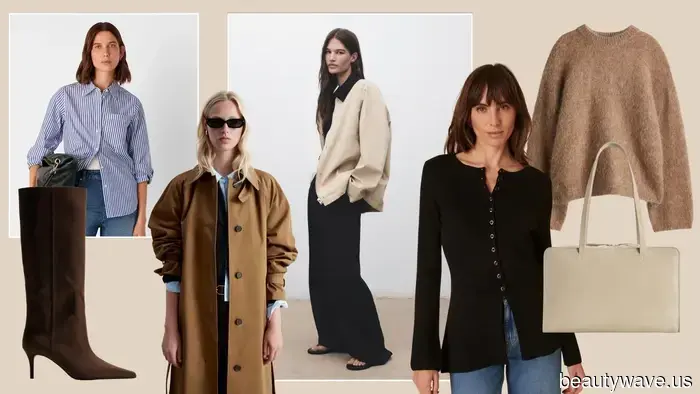 I Make a Living Discovering Pricy-Looking Purchases—12 Capsule Wardrobe Essentials That Appear Triple Their Cost
Autumn is nearly here, making it the perfect moment to assemble our capsule wardrobes for the upcoming season. For those on a budget, these fresh additions are definitely a worthwhile investment.
I Make a Living Discovering Pricy-Looking Purchases—12 Capsule Wardrobe Essentials That Appear Triple Their Cost
Autumn is nearly here, making it the perfect moment to assemble our capsule wardrobes for the upcoming season. For those on a budget, these fresh additions are definitely a worthwhile investment.
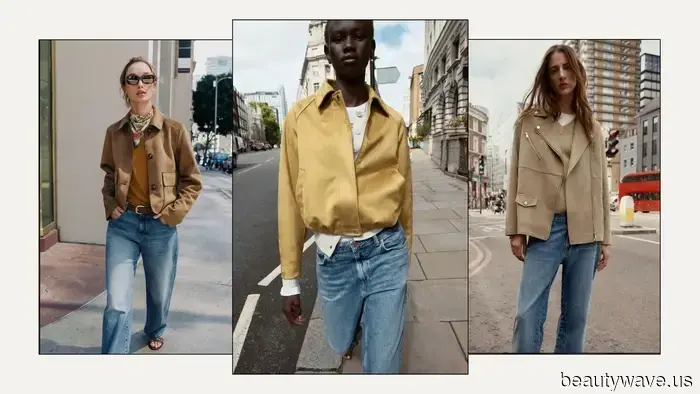 I looked for suede jackets with a designer appearance, and Zara's autumn collection came through.
A timeless autumn favorite.
I looked for suede jackets with a designer appearance, and Zara's autumn collection came through.
A timeless autumn favorite.
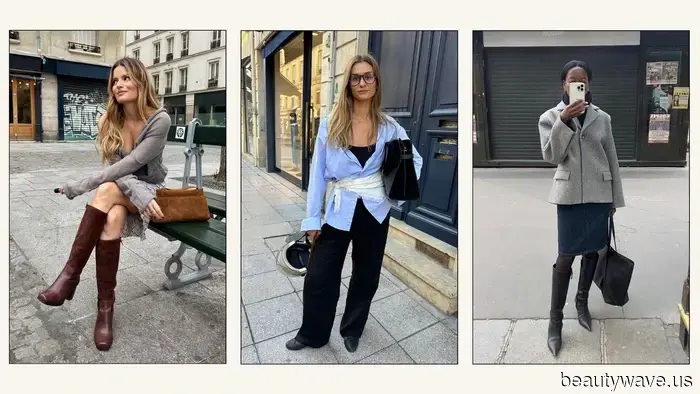 French Women Are Aware of Great Footwear—6 Autumn Styles They Are Already Sporting
I'll take their guidance.
French Women Are Aware of Great Footwear—6 Autumn Styles They Are Already Sporting
I'll take their guidance.
 Explore 35 of the Top New Arrivals This Week.
Grab them while you have the chance.
Explore 35 of the Top New Arrivals This Week.
Grab them while you have the chance.
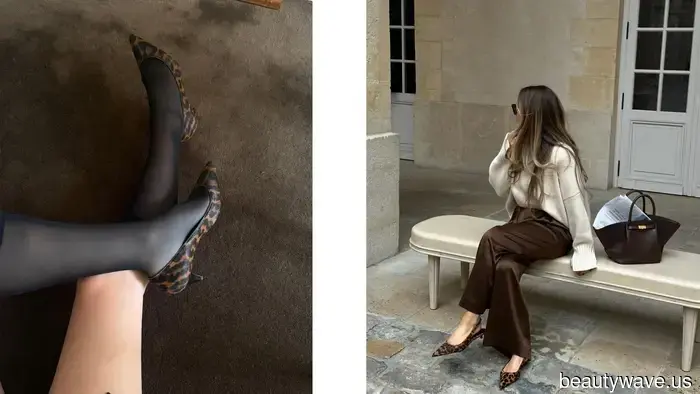 Apologies to my classic black shoes, but this printed shoe trend is shaping the fall of 2025.
Already seen on stylish individuals in Venice, NYC, and Copenhagen.
Apologies to my classic black shoes, but this printed shoe trend is shaping the fall of 2025.
Already seen on stylish individuals in Venice, NYC, and Copenhagen.
Fashion Continues to Embrace Preppy Style, But Is That Really a Negative Development?
A writer explores.