

Fashion Continues to Embrace Preppy Style; Is That Really a Negative Development?
It would be unwise to kick off a study of preppy fashion—its roots, evolving nature, and lasting significance—without first establishing the context. In London, where I'm writing this and where parts of this narrative unfold, preppy style is ubiquitous. Although the widespread nature of preppy fashion might render it seem ordinary, it is actually its ties to the Sloane Rangers and "Rahs," who embody this aesthetic and represent upper-class exclusivity, that have allowed the trend to flourish. British author George Orwell noted in a 1946 essay that "England is the most class-ridden country under the sun. It is a land of snobbery and privilege." While this observation may not be flattering, and whether one agrees or disagrees with it, it is not surprising that the institutions and entities that reinforce these values are a rich source for promoting this style of attire. If you pay attention, you will start to see that preppy fashion truly surrounds us. Its expression can be seen in the sound of penny loafers walking on the lanolin floors of offices or in the way blazers are worn throughout city streets, even when the person is off-duty.
However, at the British Library—a revered place where preppy fashion should ideally be showcased in its purest form—the staff members are not dressed in attire you would typically connect with these traditionally elite environments. In a bit of gonzo journalism, I observed that classic preppy items like argyle patterns and cable-knit sweaters were not favored by this crowd. Instead, casual jeans, relaxed suede jackets, simple collared button-ups, and trendy sneakers were the preferred choices. So, if tailored chinos can be worn to a pub and minidresses to study sessions, what does preppy fashion look like today?
(Image credit: Getty Images) Left to right: Norma Kamali's spring 1983 collection, Cindy Crawford modelling Ralph Lauren's spring/summer 1989 collection, members of the U.S. Olympic team at Henley-on-Thames during the 1948 Summer Olympics, students at Lincoln University in 1984, and a student fashion show at Claflin University in 1960. Fortunately, there is a guide for that. Released in 1980, The Official Preppy Handbook serves as a guide to navigating this puzzlement. It covers everything from selecting the best nickname to exploring the nuances of monogramming, detailing how to embody preppy style with an "abundance of detail," as described in the foreword.
In speaking with the editor and co-writer of The Official Preppy Handbook, Lisa Birnbach—who is somewhat of a prophetic figure in this domain—I learned that the definition of preppy fashion has remained largely consistent over the 45 years since it became popular. Now in her late 60s, Birnbach has witnessed every iteration of preppy style: the minimalist look of the '90s, the sleazy version of the 2000s, the twee style of the 2010s, and the current luxury trend. However, as she proposes, the essence of preppy fashion in its most authentic form is not much different from the styles she observed and wore herself as a budding 21-year-old who authored the handbook. "Preppy fashion is an expression rooted in British traditions of classic clothing where the wearer feels comfortable," Birnbach explains over Zoom. “It doesn’t have to adhere to a specific size or shape, can be unisex, and doesn’t have to be particularly flattering," she adds. "When you put on preppy attire—your cotton trousers, your cardigan—you are ready for anything. The joke in the Preppy Handbook was that whatever you wear in the morning could take you to a sports event and also to cocktails."
(Image credit: (Getty Images, ImaxTree Launchmetrics Spotlight, Alamy Creative, Everett Collection)) Left to right: Alicia Silverstone and Stacey Dash in Clueless, Blake Lively in Gossip Girl, Reese Witherspoon in Legally Blonde. Professor Carolyn Mair, PhD, a fashion historian and author of The Psychology of Fashion, supports this sentiment. "Preppy fashion began in the early 20th century, rooted in the aesthetic of Ivy League universities," she notes. "Initially reflecting upper-class leisurewear, it evolved into a more widespread aspirational style that persists because it provides a timeless, structured identity."
For those of us who grew up in the early 2000s, our reference for understanding and acquiring preppy fashion came in a completely different format. Instead of a lengthy guide, shows like Gossip Girl served as our bible. With characters like Serena Van Der Woodsen blending her Constance Billard uniform with designer pieces, it suggested that preppy fashion was primarily collegiate, but also something meant for the privileged few. Yet, according to Birnbach, genuine preppy fashion couldn’t be further from this notion. "My daughters


Other articles
 Forget the sandals—this is the shoe trend to pair with dresses in September.
Alexa Chung was recently seen in Venice donning the chic shoe trend that replaces sandals for this month. Find the style available for purchase here.
Forget the sandals—this is the shoe trend to pair with dresses in September.
Alexa Chung was recently seen in Venice donning the chic shoe trend that replaces sandals for this month. Find the style available for purchase here.
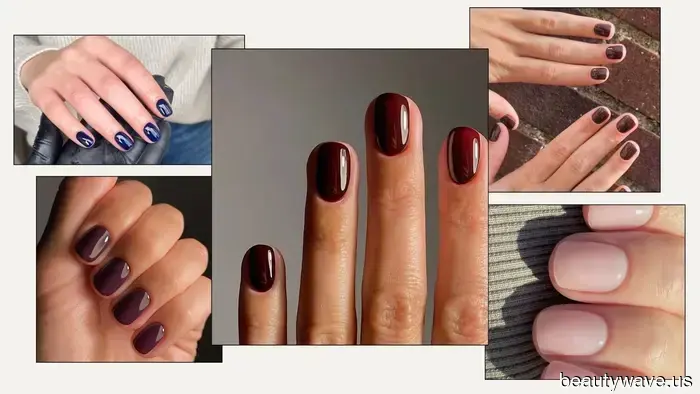 It's Time to Change Your Nail Color—Here Are the 6 Shades Poised to Dominate This Autumn
It's time to get new nails for the season.
It's Time to Change Your Nail Color—Here Are the 6 Shades Poised to Dominate This Autumn
It's time to get new nails for the season.
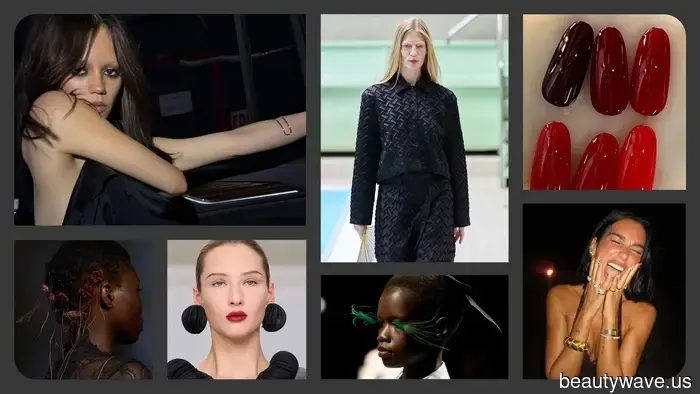 NYFW is just 9 days away—here are 9 beauty trends that editors expect to take center stage on the runways.
We're declaring it now.
NYFW is just 9 days away—here are 9 beauty trends that editors expect to take center stage on the runways.
We're declaring it now.
 Explore 35 of the Best New Arrivals This Week
Acquire them while they're available.
Explore 35 of the Best New Arrivals This Week
Acquire them while they're available.
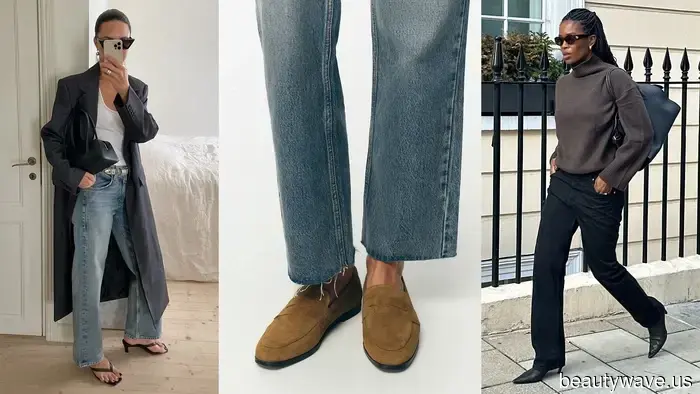 These 32 Stylish Zara Fall 2025 Shoe Discoveries Are Essential for Achieving a Fashionable Look—Good Luck Choosing Just One…
Get ready for an avalanche of praise.
These 32 Stylish Zara Fall 2025 Shoe Discoveries Are Essential for Achieving a Fashionable Look—Good Luck Choosing Just One…
Get ready for an avalanche of praise.
 Fashion Continues to Embrace Preppy Style, But Is That Really a Negative Development?
A writer explores.
Fashion Continues to Embrace Preppy Style, But Is That Really a Negative Development?
A writer explores.
Fashion Continues to Embrace Preppy Style; Is That Really a Negative Development?
A writer conducts an investigation.