
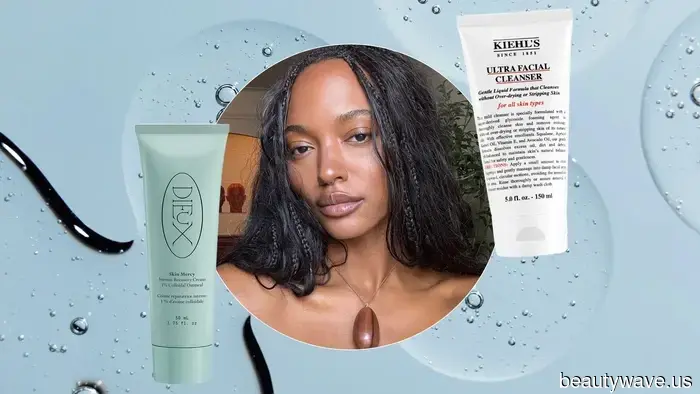
Don't Overlook Glycerin—Experts Claim It's the Best Hydrating Ingredient for Dry Skin.
Skincare ingredients frequently become trendy, regardless of whether they are new or established; it all hinges on their resurgence in the spotlight of social media. Consider niacinamide as an example. Although it has been incorporated into skincare for approximately 50 years, it gained viral popularity in 2020 as a so-called "miracle" ingredient. Miracle? Not really. However, it is indeed a science-backed multi-tasker. Another ingredient is hyaluronic acid (HA), which has also been present in skincare for many years and is naturally produced in the human body. Recently, it has been branded as *the* quintessential hydrating ingredient of all time. Nevertheless, experts have a different perspective. While HA undeniably enhances skin hydration, there is another ingredient that may be equally effective, if not better, for certain skin types—the often overlooked and underrated glycerin. Although it may not be the most glamorous skincare ingredient, it is capable of providing deep hydration, soothing, and strengthening the skin. Read on to discover everything you need to know about glycerin, and check out the expert’s selected product recommendations.
What Is Glycerin? Glycerin is a transparent, odorless liquid that can be sourced from plants, animals, or synthetically. Board-certified dermatologist Sandra Oska, MD, FAAD, explains, "Glycerin optimizes hydration in the stratum corneum, which is the outer layer of the skin." It is a powerful humectant, meaning it falls into a category of ingredients that draw water into the skin (HA is another example). "It is a known element of the skin’s natural moisturizing system," Oska elaborates. "This makes it essential for restoring the skin’s barrier, particularly in individuals with eczema. In dermatological research on skincare products, we often measure transepidermal water loss (TEWL), which indicates how much water is escaping the skin. High TEWL is present in dysfunctional barriers, while low TEWL is observed when the skin barrier is intact and effectively retains water." Glycerin aids in maintaining the skin barrier and reducing TEWL.
Paula Brezavscek, PA-C and founder of Azala Skin Clinic, concurs, stating that glycerin is a "classic" ingredient that assists in keeping the skin "hydrated, smooth, and more resilient." She mentions it is one of her favorite skincare components because of its effectiveness for nearly all skin types.
Glycerin vs. Hyaluronic Acid One particularly interesting aspect of glycerin is that it is often a superior hydrating ingredient compared to HA (yes, truly). Board-certified dermatologist Dara Spearman, MD, FAAD, comments that glycerin has a smaller molecular size, allowing it to penetrate deeper into the skin to deliver its hydrating benefits. "Hyaluronic acid and glycerin are both humectants, meaning they both hydrate the skin by retaining moisture," she explains. "While you can utilize both in your skincare routine, one is typically better suited for certain skin types. Glycerin is optimal for sensitive and/or dry skin types because it penetrates more deeply and gently addresses barrier issues." Surprised? So was I.
However, before you replace your loyal HA serum with a glycerin-infused one, Oska offers additional insights. "Compared to hyaluronic acid, glycerin has a lower molecular weight and smaller size, which contributes to its deeper penetration and significant effect on barrier function. It's important to note that not all hyaluronic acid is created equal. There is high molecular weight HA versus low molecular weight HA, but both are still considerably larger than glycerin. Although hyaluronic acid gives a more immediate plumping effect, glycerin provides a more prolonged impact on enhancing hydration and barrier support. While hyaluronic acid is the flashier, instant gratification ingredient, glycerin is the understated yet still clinically effective component." So there you have it!
Thus, glycerin is often the superior hydrating ingredient for dry, sensitive, and acne-prone skin types because of its capacity to penetrate the skin better, attract water, and bolster the skin barrier. Nonetheless, HA remains beneficial, particularly for more mature skin types or those seeking a plumping effect. Ultimately, it comes down to personal preference and product formulation, and your favorite skincare products may contain both.
Brezavscek sums it up succinctly: "When comparing glycerin to hyaluronic acid, I believe glycerin often gets underrated [...] Hyaluronic acid can still be very effective, but glycerin tends to be more consistent and less influenced by trends, especially for dry, sensitive, or barrier-compromised skin. That said, I don't think of it as a choice between one or the other. The best formulas often incorporate both."
How to Best Use Glycerin All three experts agree that glycerin, like HA, is most effective when applied to damp skin, allowing it to attract hydration. It should then be followed by an oc




Other articles
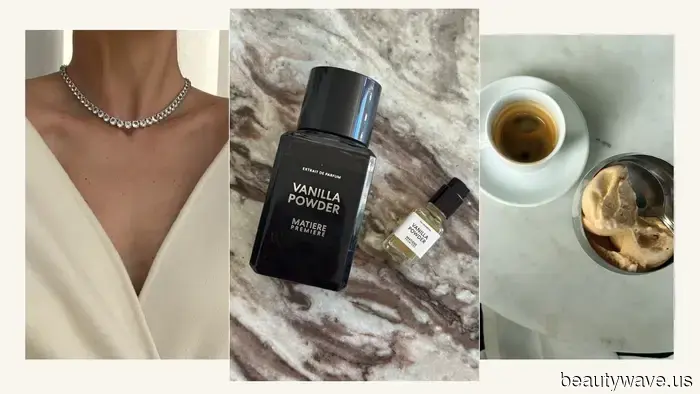 If I received a pound for each compliment that this £250 perfume has garnered for me, I could purchase another bottle.
I'm giving continuous compliments.
If I received a pound for each compliment that this £250 perfume has garnered for me, I could purchase another bottle.
I'm giving continuous compliments.
-Outfit-Formula-I-Swear-By.jpg) I'm a Shopping Editor—Here's the Easy (and Budget-Friendly) Outfit Formula I Rely On.
Pair it with a kitten heel or leopard print flats.
I'm a Shopping Editor—Here's the Easy (and Budget-Friendly) Outfit Formula I Rely On.
Pair it with a kitten heel or leopard print flats.
 5 Simple and Chic Ways French Women Are Styling Trousers This Spring
Presenting the spring trouser ensembles that all your beloved French fashion influencers are showcasing this month.
5 Simple and Chic Ways French Women Are Styling Trousers This Spring
Presenting the spring trouser ensembles that all your beloved French fashion influencers are showcasing this month.
 Skirts Were Most Stylish in the '90s—4 Vintage Trends Returning at This Time
Still very stylish.
Skirts Were Most Stylish in the '90s—4 Vintage Trends Returning at This Time
Still very stylish.
 8 Timeless Essentials Ideal for Spring, Drawing Inspiration from the Runways
Browse the timeless essentials that characterize spring, influenced by designers like Calvin Klein, COS, Fforme, Kallmeyer, Prada, Sandy Liang, Tory Burch, and Vaquera.
8 Timeless Essentials Ideal for Spring, Drawing Inspiration from the Runways
Browse the timeless essentials that characterize spring, influenced by designers like Calvin Klein, COS, Fforme, Kallmeyer, Prada, Sandy Liang, Tory Burch, and Vaquera.
 The Experts Have Weighed In—These New Spring Homeware Purchases Will Showcase Your Excellent Taste.
We consulted a panel of tastemakers to gather their top homeware picks for spring 2026, and their suggestions are definitely worth noting.
The Experts Have Weighed In—These New Spring Homeware Purchases Will Showcase Your Excellent Taste.
We consulted a panel of tastemakers to gather their top homeware picks for spring 2026, and their suggestions are definitely worth noting.
Don't Overlook Glycerin—Experts Claim It's the Best Hydrating Ingredient for Dry Skin.
Dermatologists indicate that glycerin is an underappreciated and often ignored hydrating component that can be more effective than hyaluronic acid. Here’s the reason.