
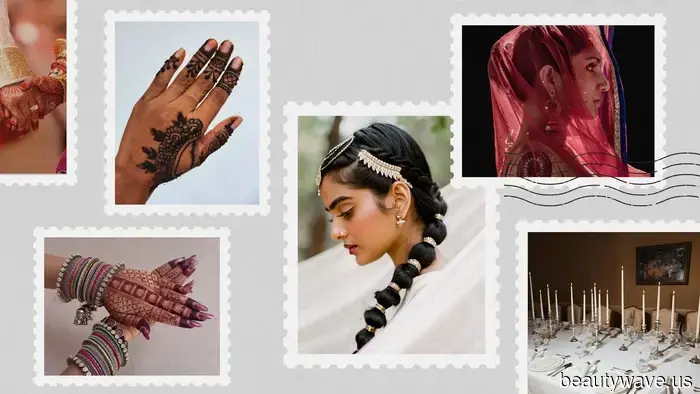
This bridal beauty tradition is rooted in thousands of years of history and represents love, luck, and fresh starts.
(Image credit: Audrey Hedlund) Welcome to Worldly Beauty, a quarterly series that highlights beauty products, ingredients, and cultural traditions. To provide a comprehensive perspective, we share insights and recommendations from local experts and influencers. This column celebrates diversity, going beyond familiar concepts to illuminate the beauty practices and philosophies that enrich our world.
(Image credit: Original art by Audrey Hedlund) Beauty is inherently personal, especially on or just before one's wedding day. In contemporary times, it's not unusual for brides to schedule multiple makeup trials, scour Pinterest for the ideal manicure, and even invest in cosmetic procedures to feel and look their best on their special day. Whether minimalist or extravagant, bridal beauty reflects the individual behind the veil. Pre-wedding beauty customs vary widely based on culture, geography, and family traditions. In Korea, for instance, preparations may include the paebaek—a formal tea ceremony during which the bride traditionally wears red dots on her cheeks. In Italy, it might involve using olive oil-infused beauty products to prepare the bride’s hair and skin. In this inaugural special wedding edition of Worldly Beauty, we are focusing on the tradition of mehndi—a South Asian prenuptial ceremony where henna is applied to the bride’s hands and feet, symbolizing joy, prosperity, good fortune, and new beginnings. This age-old tradition, also prevalent in the Middle East and North Africa, connects modern brides to a rich historical legacy. They may draw inspiration from designs of past generations, incorporate hidden initials within the elaborate patterns, or collaborate on contemporary looks. Ultimately, it is more than just a bridal beauty custom; it serves as a celebration marking one of life’s significant milestones, which we explore with the guidance of Priyanka Ganjoo, founder and CEO of Kulfi Beauty.
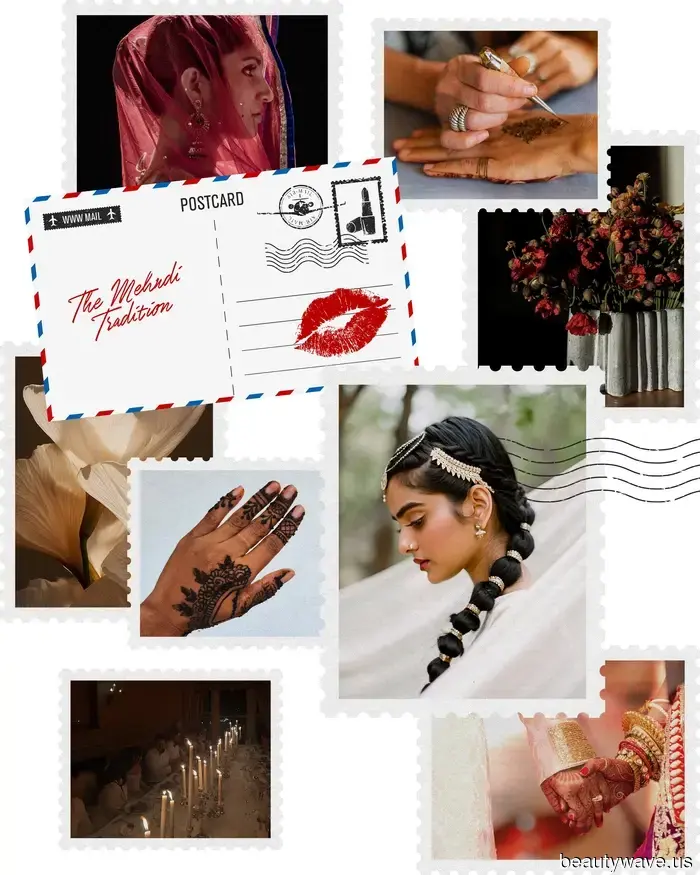
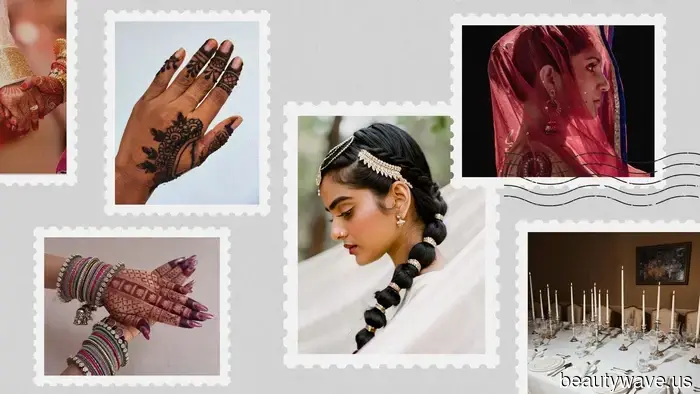
(Image credit: Vault Stock; Getty Images; Original art by Audrey Hedlund) Henna is a plant found in the tropical regions of South Asia, Africa, and Northern Australia. When a paste is applied to the skin, it leaves a temporary deep reddish-brown stain that fades gradually. This has been part of mehndi (referring to both the ceremony and the designs) for thousands of years, and today, it is commonly used before major holidays, festivals, and weddings. Ganjoo notes that before vows are exchanged, friends and family come together for the bridal mehndi ceremony. Artists create intricate designs on the hands and feet of the bride and close family members. Traditionally, the bride receives the most elaborate designs, while friends and family receive simpler, smaller ones. Some mehndi ceremonies are vibrant, filled with music, dancing, and laughter, while others are modest and introspective, focused on blessing the couple. "Every family has its own way of celebrating, but it’s generally a gathering where the bride’s hands and feet are adorned with detailed henna designs among loved ones," Ganjoo states. "To me, it signifies the anticipation of celebration. It’s a moment to slow down before the wedding. You sit still for hours while your cherished ones laugh, dance, share stories, and rejoice in this new chapter together. It’s not just about the final design; it’s about time spent with loved ones." Ganjoo explains that a bridal mehndi can take between three to six hours, depending on the intricacy of the designs. While the final look is visually striking, the true beauty lies in the process itself, providing the bride and her loved ones a chance to pause and connect. "During this time, the bride is usually surrounded by friends and family. As many know, it can be an incredibly hectic period, so being still while the henna is applied naturally brings a moment to reflect and soak everything in."
Professional artists are typically hired to create traditional bridal mehndi, as the intricate patterns demand expert freehand skills. However, it is also possible to apply it using store-bought kits and stencils. "Usually, the paste stays on for several hours, and many brides keep it on overnight to achieve the deepest color," Ganjoo says. "After removal, the stain initially appears bright orange and deepens to a rich reddish-brown over the next couple of days. The color gradually fades over one to three weeks, depending on skin type, aftercare, and application site. I love that the design changes over time, making it beautiful and unique at every stage." Ganjoo emphasizes that no two mehndi designs are the same—this is the essence of it. It highlights individuality, expression, and creativity. "Many artists incorporate florals, paisleys, vines, mandalas, or symbolic motifs passed down through generations. Brides may also personalize their mehndi by including significant details, like initials, places they’ve visited, or elements representing their relationship. It can be deeply personal, allowing each bride to tell her own story." Ganjoo drew inspiration from mehndi when developing Kulfi’s Mehndi Moment Blush


Other articles
 This bridal beauty custom is rooted in thousands of years of history and represents love, fortune, and fresh starts.
"It enables each bride to share her unique story."
This bridal beauty custom is rooted in thousands of years of history and represents love, fortune, and fresh starts.
"It enables each bride to share her unique story."
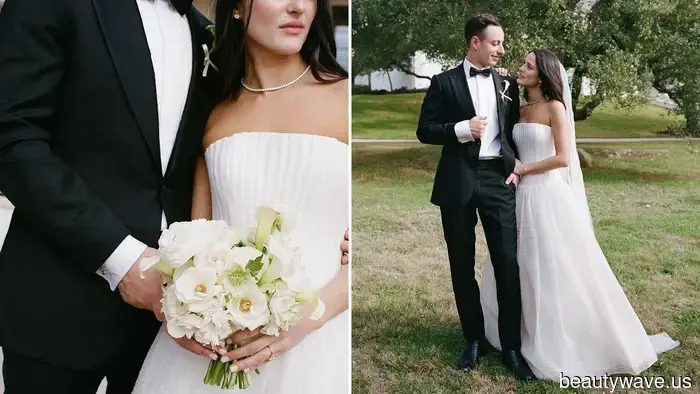 An Elegant Barbecue Dinner and a Danielle Frankel Gown Create the Ambiance for This Fashion Editor's Wedding in Texas
Witness all the exquisite details here.
An Elegant Barbecue Dinner and a Danielle Frankel Gown Create the Ambiance for This Fashion Editor's Wedding in Texas
Witness all the exquisite details here.
 Fashion Experts Agree: You Only Need One Wedding Guest Dress for Every Dress Code—Here They Are
Here they are, ranging from formal black-tie invitations to beachside ceremonies.
Fashion Experts Agree: You Only Need One Wedding Guest Dress for Every Dress Code—Here They Are
Here they are, ranging from formal black-tie invitations to beachside ceremonies.
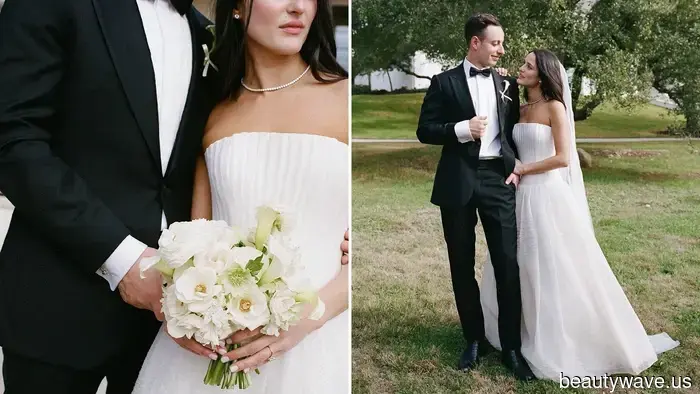 An Elegant Barbecue Feast and a Danielle Frankel Gown Create the Atmosphere for This Fashion Editor's Wedding in Texas.
Observe all the stunning details here.
An Elegant Barbecue Feast and a Danielle Frankel Gown Create the Atmosphere for This Fashion Editor's Wedding in Texas.
Observe all the stunning details here.
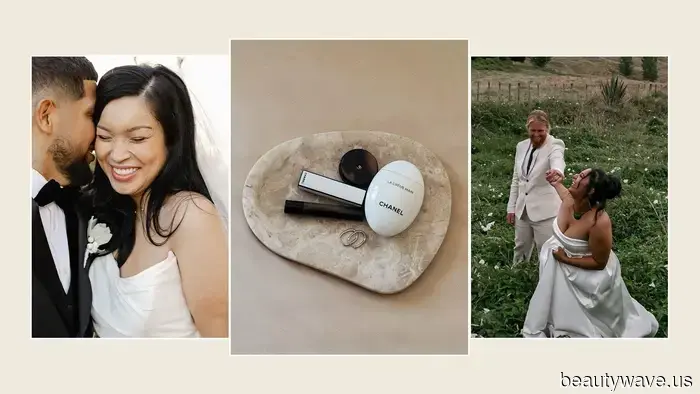 The Traditional Bridal Makeup Look Is Out—How No-Makeup Brides Are Changing the Trend
Achieving flawless makeup for the wedding day is one of the most important tasks on a bride's checklist. Discover the women who opted for radiant skincare instead of traditional makeup.
The Traditional Bridal Makeup Look Is Out—How No-Makeup Brides Are Changing the Trend
Achieving flawless makeup for the wedding day is one of the most important tasks on a bride's checklist. Discover the women who opted for radiant skincare instead of traditional makeup.
 Mia Calabrese from Summer House discusses "Bad B*tch" beauty and her connections with Rihanna and Ciara Miller.
Additionally, her favorite products for tackling the heat in the Hamptons.
Mia Calabrese from Summer House discusses "Bad B*tch" beauty and her connections with Rihanna and Ciara Miller.
Additionally, her favorite products for tackling the heat in the Hamptons.
This bridal beauty tradition is rooted in thousands of years of history and represents love, luck, and fresh starts.
"It enables each bride to share her unique story."