

Was the Met Exhibit Successful Regarding Body Diversity?
Lauren Chan serves as an editor in residence for Who What Wear, is a model, a former award-winning fashion editor, and the founder of Henning, a luxury plus-size clothing brand. During the press preview for the Metropolitan Museum of Art's new Costume Institute exhibit, Anna Wintour addressed the audience, stating that Costume Art is inclusive of "every body—nude bodies, classical bodies, corpulent bodies, and disabled bodies." Given that the Met's official press release had previously indicated that the exhibit aimed to "illuminate the indivisible connection between clothing and the body," I had expected Wintour to explicitly reference the concept of size diversity. I was disappointed when terms such as fat, plus-size, mid-size, body-diverse, size-diverse, size-inclusive, or bigger bodies weren't mentioned. However, after some searching during Lauren Sánchez Bezos’s speech, I realized that she had addressed us indirectly by using the term corpulent.
While Merriam-Webster defines "corpulent" simply as "having a large bulky body," the plaque for the Corpulent Body section of the exhibit elaborated: "The corpulent body—reclaimed within contemporary fat studies as the 'fat body,' a neutral descriptor rather than a pejorative—has historically occupied an ambivalent position within visual and material culture. Simultaneously venerated and stigmatized, associated with fecundity yet burdened by moral suspicion, monumentized yet rendered abject, corpulence has served as a symbolic surface upon which societies inscribe anxieties concerning sexuality and reproduction, as well as class, race, gender, and power. As fat-studies scholars have noted, the issue lies not within the flesh itself but within the regulatory regimes that surveil, discipline, and normalize it."
Having navigated life in a bigger body and been immersed in the plus-size fashion industry for over a decade, I realized that the term corpulent is not one I frequently encounter, nor do I identify with it. Although it's more prevalent in art history and academic literature, our community in the fashion sector has spent years advocating for inclusion through a variety of terms that resonate with us, despite some disagreements among us (for instance, I personally find "curve" to be evasive and patronizing). "Corpulent" is not the language we use when discussing ourselves, one another, or our clothing. The museum's choice to sidestep the words our community has reclaimed (like "fat"), which we view as empowering, felt like a linguistic slight. It seemed more aligned with the regulatory regimes it had condemned rather than being a neutral or supportive institution. Moreover, Wintour's reference to "nude bodies" could have been more impactful if stated as "bodies of color" and "gender nonconforming bodies." Failing to appropriately and explicitly recognize marginalized communities—especially while showcasing them for a ticketed audience—can seem exploitative. While I acknowledge this critique is detailed, I must emphasize that language is vital. It serves as a record of our civilization. When those outside our community write the narrative, we are viewed and remembered through their biased perspectives.
As I began to explore the exhibit, my spirits lifted. At the entrance, I saw a trompe l'oeil coat by Jacques Kaplan featuring a painting of a voluptuous body, a Dior creation custom-made for Yseult in the Classical section, two pieces by Michaela Stark in the galleries, and another by Marine Serre toward the end. Numerous designs from Comme des Garçons, Yohji Yamamoto, and Ann-Sofie Back added volume to the silhouettes. Yet it wasn't until I entered the Corpulent Body section that I exhaled with relief. In this area dedicated to size, I counted eight designs from Michaela Stark, Sinead O'Dwyer, Karoline Vitto, Ester Manas, Di Petsa, Doublet, and Victoria's Secret. The mannequins varied in proportion and size, likely ranging from 12 to 20 (the largest modeled by Charlie Reynolds, with measurements of 52 inches in the chest, 44 inches in the waist, and 48 inches in the hip). This level of inclusion represents a significant achievement.
However, the museum overlooked the intersectionality of larger bodies with the exhibit's other themes of race, gender, and ability. This gap indicated that those curating the exhibit likely lacked lived experience in larger bodies. They would have understood that fat individuals do not exist in isolation and that many are also people of color, queer, and/or disabled. The absence of this intersection became evident when I noticed maternity styles and a wall of bodysuits in various skin tones displayed on thin mannequins.
Other sections did showcase some intersectionality, such as a maternity outfit modeled by AAPI gender nonconforming individuals, which felt modern and reflective of today's fashion landscape, with its rich layers of diversity in casting. One of the most notable sections was the


Other articles
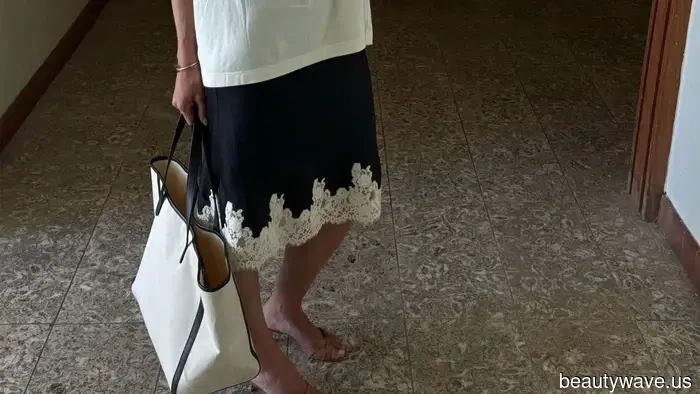 Not just a plain white short-sleeve T-shirt—this is the anti-trend top that trendy girls are pairing with skirts, jeans, and stylish outfits…
The white short-sleeve T-shirt is a classic essential, yet style icons are currently pairing this basic piece with skirts, jeans, and trendy trousers.
Not just a plain white short-sleeve T-shirt—this is the anti-trend top that trendy girls are pairing with skirts, jeans, and stylish outfits…
The white short-sleeve T-shirt is a classic essential, yet style icons are currently pairing this basic piece with skirts, jeans, and trendy trousers.
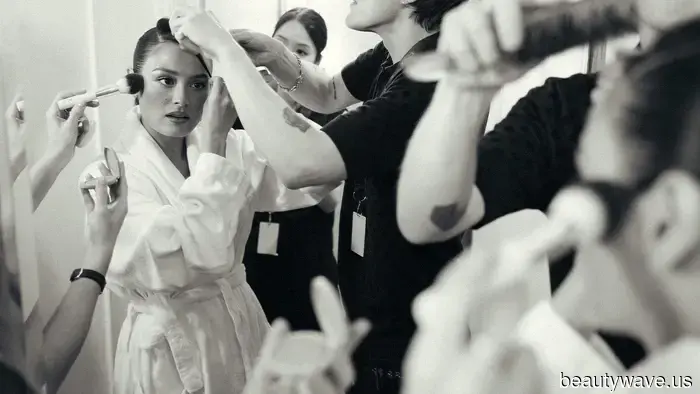 Chase Sui Wonders humorously refers to her first Met Gala as "effortless"—check out all that happened…
Sui Wonders shares every aspect of her inaugural Met Gala experience, including five beauty treatments, action films, and the fact that she still couldn't find time for a manicure.
Chase Sui Wonders humorously refers to her first Met Gala as "effortless"—check out all that happened…
Sui Wonders shares every aspect of her inaugural Met Gala experience, including five beauty treatments, action films, and the fact that she still couldn't find time for a manicure.
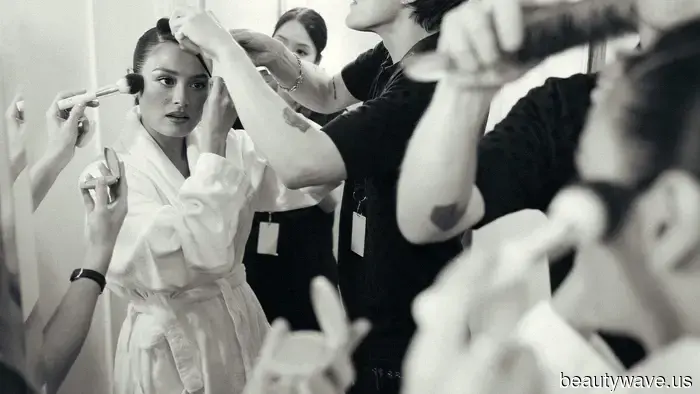 Chase Sui Wonders sarcastically refers to her initial Met Gala experience as "effortless"—check out all that happened…
Sui Wonders shares all the specifics of her inaugural Met Gala experience, which involves five beauty procedures, action films, and yet no opportunity to get a manicure.
Chase Sui Wonders sarcastically refers to her initial Met Gala experience as "effortless"—check out all that happened…
Sui Wonders shares all the specifics of her inaugural Met Gala experience, which involves five beauty procedures, action films, and yet no opportunity to get a manicure.
 Was the Met exhibit successful regarding body diversity?
Size-inclusivity advocate Lauren Chan examines the various aspects of diversity present in the Costume Institute's Costume Art exhibit.
Was the Met exhibit successful regarding body diversity?
Size-inclusivity advocate Lauren Chan examines the various aspects of diversity present in the Costume Institute's Costume Art exhibit.
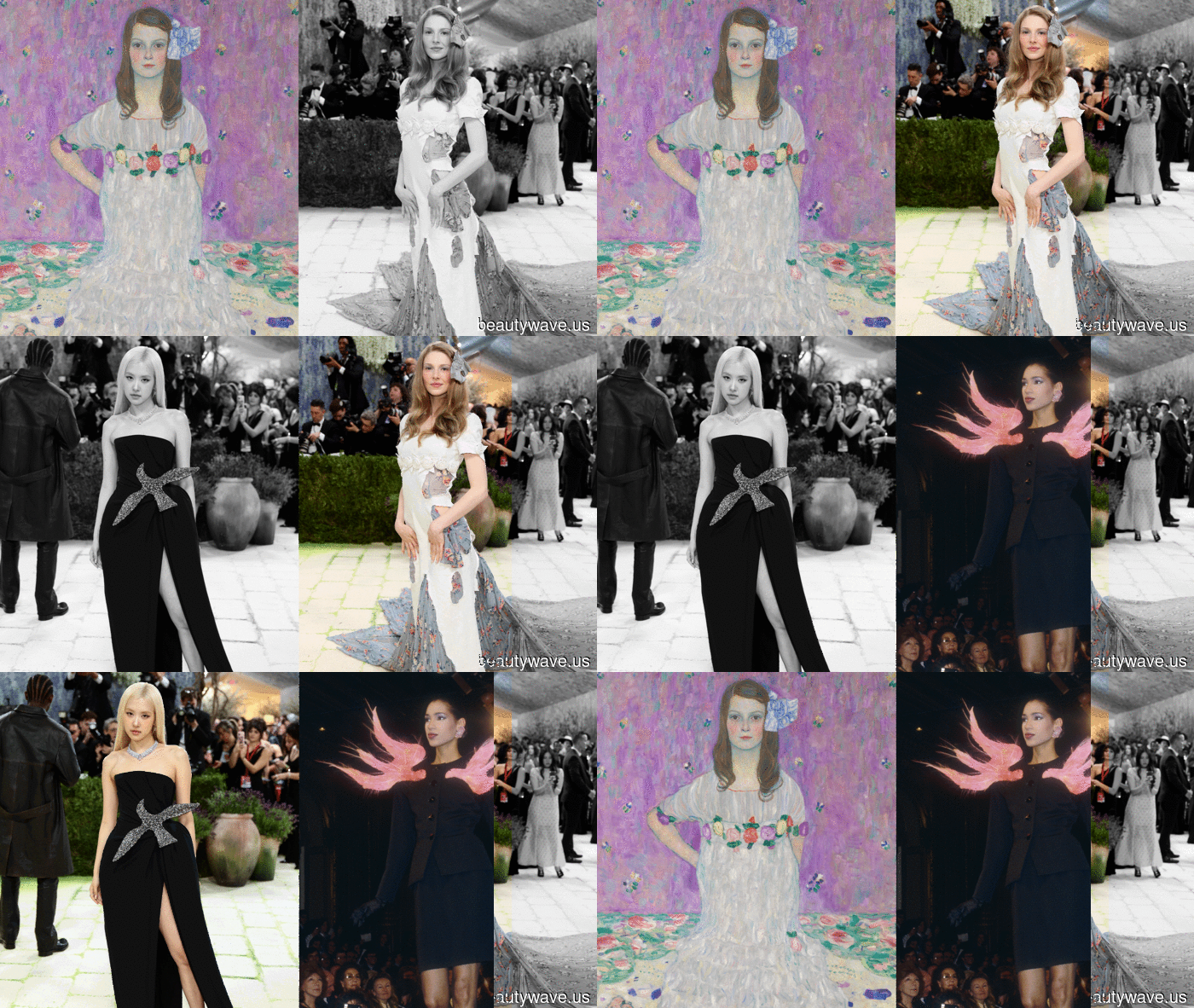 At the 2026 Met Gala, fashion didn't merely reference art—it transformed into art itself.
From the Costume Institute exhibition at the Met to the Met Gala red carpet, the distinction between fashion and art became increasingly indistinct.
At the 2026 Met Gala, fashion didn't merely reference art—it transformed into art itself.
From the Costume Institute exhibition at the Met to the Met Gala red carpet, the distinction between fashion and art became increasingly indistinct.
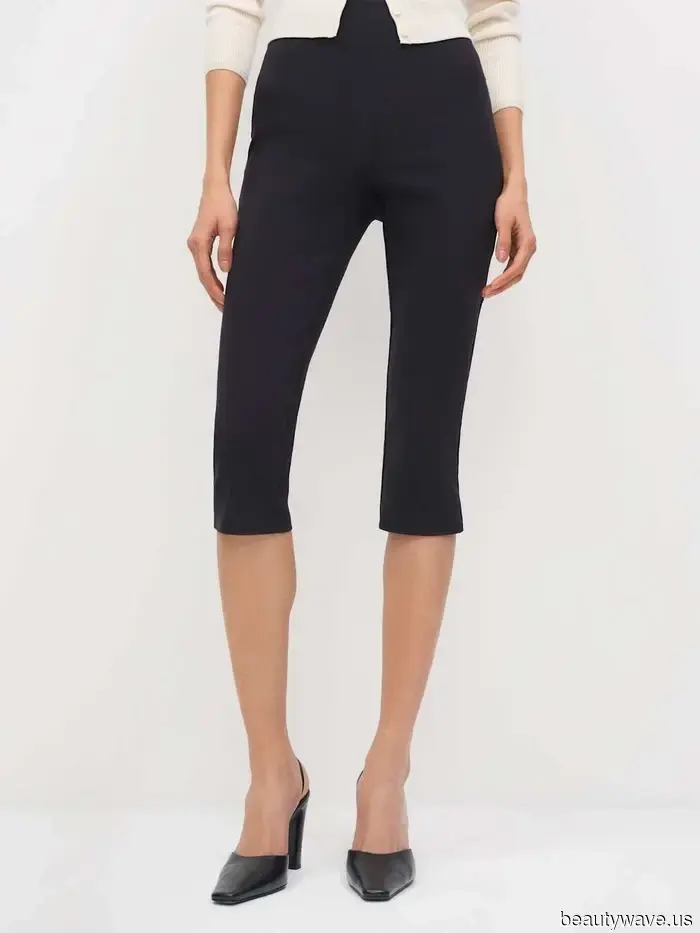 Kylie Received the Message That This Is the Must-Have Capri-Pant Look for 2026
This is the ideal outfit formula for spring.
Kylie Received the Message That This Is the Must-Have Capri-Pant Look for 2026
This is the ideal outfit formula for spring.
Was the Met Exhibit Successful Regarding Body Diversity?
Size-inclusivity advocate Lauren Chan examines the various dimensions of diversity present in the Costume Institute's Costume Art exhibit.